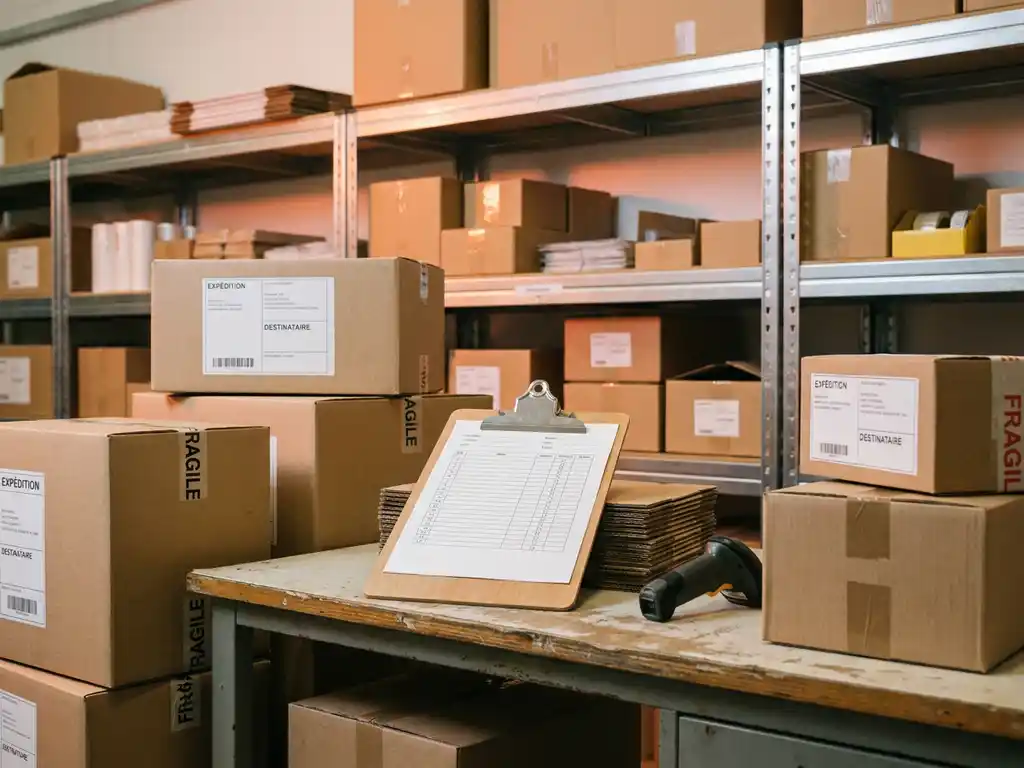
Finding the right e-commerce fulfillment partner is one of the most consequential decisions a growing brand can make. The wrong choice leads to delayed shipments, frustrated customers, and operational chaos. The right one becomes a genuine growth engine, freeing your team to focus on product and strategy while the logistics run smoothly in the background. Whether you are exploring e-commerce fulfillment solutions for the first time or reconsidering your current setup, the questions below will help you make a confident, well-informed decision.
What is an e-commerce fulfillment partner?
An e-commerce fulfillment partner is a third-party provider that handles the storage, packing, and shipping of your products on your behalf. Instead of managing a warehouse, hiring logistics staff, and coordinating carriers yourself, you outsource those operations to a specialist who takes care of the entire order flow from the moment a purchase is made to the moment it arrives at your customer’s door.
A fulfillment partner typically provides warehouse space to store your inventory, picks and packs individual orders, and ships them through integrated carrier networks. More advanced partners go further, offering returns management, customer service support, and connections to multiple sales channels. The scope of what a fulfillment partner covers varies significantly between providers, which is why understanding what you actually need before you start comparing options is so important.
Why does choosing the right fulfillment partner matter?
Choosing the right fulfillment partner matters because logistics directly shapes the customer experience, your operational costs, and your ability to scale. A fulfillment partner that cannot keep up with demand during peak periods, or that ships orders slowly and inaccurately, will damage your brand reputation in ways that are difficult to recover from.
For brands selling on marketplaces like Amazon or Bol, the stakes are even higher. Marketplace algorithms reward sellers with fast, reliable fulfillment. Poor performance metrics, such as late shipment rates or high cancellation rates, can suppress your product listings and reduce visibility. Competing with Amazon FBA sellers, for example, requires a fulfillment setup that can match or exceed the delivery speed and reliability that marketplace customers have come to expect. Your fulfillment partner is not just a logistics vendor, it is a core part of your competitive positioning.
What services should a fulfillment partner offer?
A capable fulfillment partner should offer, at minimum, warehousing, order picking and packing, carrier integration, and returns processing. Beyond that baseline, the best partners offer value-added services that support your broader e-commerce strategy rather than just moving boxes.
Look for the following when evaluating what a fulfillment partner brings to the table:
- Flexible storage options that accommodate different product types and seasonal volume changes
- Multi-channel order management so that orders from your webshop, Amazon, Bol, and other channels flow into one system
- Real-time inventory visibility so you always know what stock levels look like across locations
- Returns handling that is efficient and clearly communicated to end customers
- Customer service support for order-related queries, especially if you are selling across multiple markets
- Scalability so the partner can grow with you without requiring you to renegotiate or rebuild processes from scratch
The more services a fulfillment partner can handle under one roof, the less operational complexity you carry as a brand.
How does a fulfillment partner handle marketplace integrations?
A fulfillment partner handles marketplace integrations by connecting your inventory and order management systems directly to the APIs of platforms like Amazon, Bol, and other marketplaces. This means that when a customer places an order on any connected channel, the fulfillment system receives it automatically, processes it, and updates stock levels in real time across all platforms.
For brands competing with Amazon FBA listings, this kind of seamless integration is critical. Amazon FBA gives sellers a built-in logistics advantage, but third-party fulfillment providers with strong marketplace integrations can offer comparable speed and reliability while giving you more control over your inventory and margins. The key questions to ask are whether the partner supports all the marketplaces you sell on, how quickly their system syncs order data, and how they handle marketplace-specific requirements such as labeling standards or return policies.
Weak or manual integrations create delays and errors. A fulfillment partner with a robust technical platform will handle these connections automatically, reducing the risk of overselling, missed orders, or compliance issues on individual marketplaces.
What questions should you ask before signing with a fulfillment partner?
Before committing to a fulfillment partner, you should ask specific, operational questions that reveal how they perform under real conditions, not just how they present themselves during a sales conversation.
Here are the most important questions to put on the table:
- What is your average order processing time? Understand the gap between when an order is placed and when it leaves the warehouse.
- How do you handle peak periods? Ask how they scale capacity during high-demand seasons without compromising accuracy or speed.
- Which marketplaces and sales channels do you integrate with? Make sure your current and planned channels are supported natively.
- What does your returns process look like? Returns are a major pain point in e-commerce, and a vague answer here is a red flag.
- How is inventory visibility provided? You need real-time access to stock data, not weekly reports.
- What are the costs and how do they scale? Understand the pricing model, including storage fees, pick-and-pack costs, and any variable charges.
- What happens when something goes wrong? Ask about their error rate and what their process is for resolving fulfillment mistakes.
A fulfillment partner worth working with will answer these questions clearly and confidently. Vague or evasive responses are a signal to keep looking.
How do you know if your fulfillment partner is performing well?
You know your fulfillment partner is performing well when your key logistics metrics consistently hit agreed targets and your customers rarely contact you about delivery problems. The most reliable indicators of fulfillment performance are order accuracy rate, on-time shipment rate, inventory accuracy, and return processing time.
Set clear performance benchmarks before you start working together and review them regularly. Specifically, track:
- Order accuracy rate: The percentage of orders shipped correctly, with no wrong items or quantities
- On-time shipment rate: How consistently orders leave the warehouse within the promised processing window
- Inventory accuracy: How closely the system’s stock count matches physical inventory
- Return processing speed: How quickly returned items are received, inspected, and restocked
- Marketplace performance scores: On platforms like Amazon, your seller metrics directly reflect fulfillment quality
If your partner provides transparent reporting and proactively flags issues before you notice them, that is a strong sign of a mature operation. If you are always chasing data or discovering problems through customer complaints, it is time to reassess the relationship.
How Distrilink helps with e-commerce fulfillment
At Distrilink, we help brands grow quickly and in a controlled way on online marketplaces. Rather than building your own marketplace team, IT infrastructure, or logistics operation from scratch, you can activate and scale immediately through us. We take care of the full operational execution, from activation and optimisation to logistics and customer service, supported by our own platform and in-house fulfillment. Specifically, we offer:
- A centralised platform that manages your products across all connected marketplaces simultaneously
- In-house warehousing with the flexibility to handle different product types and volumes
- Native integrations with all major European marketplaces, including Amazon and Bol
- Full customer service handling so your team does not need to manage order-related queries
- A data-driven, standardised approach that gives you clear insight into your performance at all times
We currently represent more than 25 brands and are connected to all major European marketplaces. Brands that work with us expand their e-commerce reach without adding operational complexity. Ready to scale without the overhead? Get in touch with Distrilink and let us show you what accelerated growth looks like in practice.
[seoaic_faq][{“id”:0,”title”:”How long does it typically take to onboard with a new fulfillment partner?”,”content”:”Onboarding timelines vary by provider, but most established fulfillment partners can get you operational within two to six weeks, depending on the complexity of your product catalog, the number of sales channels you need integrated, and how quickly your inventory can be transferred to their warehouse. To speed up the process, prepare your SKU list, product dimensions and weights, and channel credentials before your first onboarding call. The more organized your data is upfront, the faster the technical setup and inventory intake will go.”},{“id”:1,”title”:”What is the difference between a fulfillment partner and Amazon FBA?”,”content”:”Amazon FBA is a fulfillment service tied exclusively to the Amazon ecosystem, meaning your inventory is locked into Amazon’s network and primarily benefits your Amazon sales channel. A third-party fulfillment partner, by contrast, can service all your channels simultaneously — your own webshop, Amazon, Bol, and other marketplaces — from a single inventory pool. This gives you more flexibility, better margin control, and the ability to build a brand experience that is not entirely dependent on Amazon’s infrastructure and policies.”},{“id”:2,”title”:”How do I know if my business is ready to outsource fulfillment?”,”content”:”The clearest signal that you are ready to outsource is when fulfillment is consuming time and resources that should be going toward growth — product development, marketing, or expanding into new channels. Practically speaking, if you are shipping more than 50 to 100 orders per day, managing seasonal volume spikes is becoming unmanageable, or you are looking to expand into new markets without building local infrastructure, outsourcing fulfillment makes strong financial and operational sense. The cost of a fulfillment partner is almost always offset by the efficiency gains and the overhead you eliminate.”},{“id”:3,”title”:”What happens to my inventory if I want to switch fulfillment partners later?”,”content”:”Switching fulfillment partners requires careful planning to avoid stockouts or shipment delays during the transition. Most providers will allow you to arrange an inventory transfer, but you should clarify exit terms — including notice periods, transfer fees, and how long they will continue processing orders during the handover — before signing any contract. To protect yourself, always negotiate a clear exit clause and avoid partners who make inventory retrieval unnecessarily complicated or expensive.”},{“id”:4,”title”:”Can a fulfillment partner handle products that require special storage or packaging conditions?”,”content”:”Many fulfillment partners can accommodate products with specific requirements, such as temperature-sensitive goods, fragile items, oversized products, or those requiring custom branded packaging — but capabilities vary significantly between providers. When evaluating partners, be explicit about your product’s storage and handling needs from the very first conversation, and ask for evidence that they have handled similar products before. A partner who is vague about their special handling capabilities or who treats your requirements as an afterthought is unlikely to execute reliably at scale.”},{“id”:5,”title”:”How should I handle customer expectations around delivery speed when using a third-party fulfillment partner?”,”content”:”The key is to align your promised delivery windows on your storefront and marketplace listings with the actual processing and shipping times your fulfillment partner can consistently deliver. Overpromising on delivery speed is one of the most common mistakes brands make when transitioning to a fulfillment partner, and it leads directly to negative reviews and marketplace penalties. Work with your partner to establish realistic SLAs, build in a small buffer for carrier delays, and update your product listings accordingly — under-promising and over-delivering is always the safer strategy.”},{“id”:6,”title”:”What are the most common mistakes brands make when choosing a fulfillment partner?”,”content”:”The most frequent mistakes are choosing based on price alone, failing to test the partner with a small volume pilot before fully committing, and not asking detailed questions about peak-period capacity and error resolution processes. Many brands also underestimate the importance of technology — a fulfillment partner with a weak or manual integration setup will create operational headaches that erode any cost savings. Take the time to speak with existing clients of the provider, request a warehouse visit if possible, and treat the evaluation process as rigorously as you would any other major business decision.”}][/seoaic_faq]