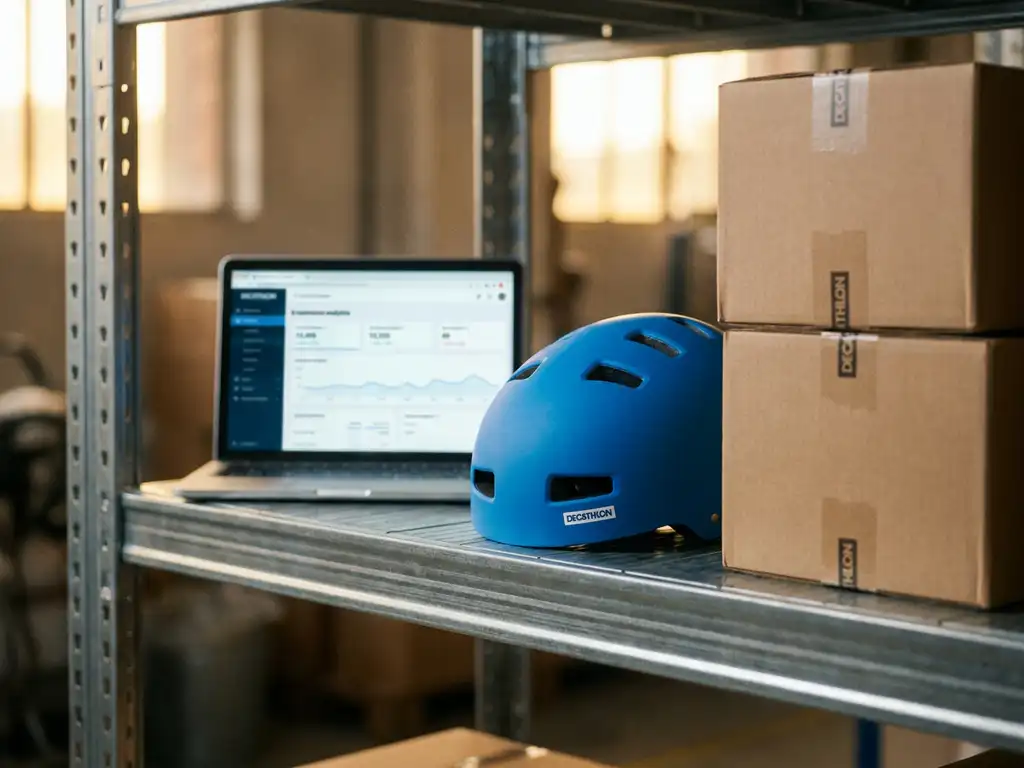

To sell on Decathlon’s marketplace, you need to apply as a third-party seller through Decathlon’s official seller portal, get approved, and list products that align with their sports and outdoor focus. The platform is open to professional sellers across Europe, but Decathlon applies strict quality and category requirements before granting access. This article walks through everything from eligibility and setup to fees, logistics, and listing optimization.
Who can sell on Decathlon’s marketplace?
Decathlon’s marketplace is open to professional sellers and brands whose products fit within the sports, fitness, outdoor, and active lifestyle categories. You must be a registered business entity to apply. Individual or casual sellers are not eligible. Decathlon prioritizes sellers whose product range complements or extends their own catalog rather than directly competing with their private-label Decathlon brands.
In practice, this means brands selling equipment, apparel, accessories, or nutrition products related to sports and physical activity are well positioned to apply. Decathlon operates its marketplace across several European countries, so sellers looking to reach French, Belgian, Spanish, Italian, or German consumers, among others, can potentially activate their presence across multiple markets through a single account structure.
Key eligibility criteria typically include:
- Registered business with a valid VAT number
- Products in sports, fitness, or outdoor-related categories
- Ability to meet Decathlon’s product data and compliance standards
- Capacity to fulfill orders reliably within the agreed service levels
- Products that do not directly replicate Decathlon’s own house brands
Brands that already sell on major European marketplaces and want to expand their reach will find Decathlon an attractive addition to their channel mix, given its highly targeted, sports-focused customer base.
What are the steps to get started as a Decathlon seller?
Getting started as a Decathlon marketplace seller involves submitting an application, completing onboarding, integrating your product catalog, and going live. The process is structured and requires preparation, particularly around product data quality and compliance documentation. Plan for several weeks between application and your first live listing.
The typical onboarding journey looks like this:
- Submit your seller application via Decathlon’s marketplace partner portal, providing business details, product category information, and your intended catalog scope.
- Await validation from Decathlon’s partner team, who will assess your brand fit, product quality, and compliance with their marketplace standards.
- Complete commercial and legal onboarding, including signing the seller agreement and providing VAT registration and other required documentation.
- Integrate your product catalog using Decathlon’s required data format. This typically involves structured product feeds with specific attributes, images, and descriptions aligned to Decathlon’s taxonomy.
- Configure logistics settings, including your delivery promise, return policy, and fulfillment method.
- Go live and monitor performance closely during the initial period, as Decathlon tracks seller metrics from day one.
The most common bottleneck in this process is product data preparation. Decathlon has detailed requirements for how products must be described, categorized, and enriched. Sellers who invest time upfront in clean, complete product content move through onboarding significantly faster.
What fees does Decathlon charge marketplace sellers?
Decathlon charges marketplace sellers a commission fee on each completed sale, with the percentage varying by product category. There is typically no fixed monthly subscription fee for third-party sellers, making the cost structure performance-based. Commission rates generally range from around 10% to 20% depending on the category, though exact rates are confirmed during the commercial onboarding process.
Beyond the base commission, sellers should factor in the following potential costs:
- Payment processing fees, which may be included in the commission or charged separately depending on the market
- Logistics costs if you opt for Decathlon’s fulfillment services rather than managing shipping independently
- Return handling costs, as Decathlon’s return policy tends to be customer-friendly, meaning sellers absorb a portion of return logistics
- Promotional contributions if you participate in Decathlon-led campaigns or discount events
Unlike some marketplaces, Decathlon does not currently operate a pay-per-click advertising model for third-party sellers in the same way Amazon does, which simplifies the cost structure but also limits paid visibility levers. Organic ranking and content quality therefore carry more weight in your overall performance.
What are the logistics and fulfillment options on Decathlon’s marketplace?
Decathlon marketplace sellers can fulfill orders either through their own logistics infrastructure or through Decathlon’s fulfillment services, depending on availability in the target market. Self-fulfillment gives you full control over your warehouse and shipping operations, while Decathlon-managed fulfillment can improve delivery speed and customer trust signals on the platform.
Self-fulfillment by the seller
With self-fulfillment, you manage your own stock, pick and pack, and arrange carrier delivery directly to the end customer. You are responsible for meeting the delivery promise displayed on the product page. Decathlon monitors on-time delivery rates closely, and consistently missing your stated delivery window can impact your seller score and listing visibility.
Decathlon-managed fulfillment
In markets where Decathlon offers a warehousing and fulfillment service for third-party sellers, you ship stock to their logistics center and Decathlon handles the rest. This model can improve your delivery speed, reduce your operational burden, and align your listings more closely with Decathlon’s own delivery standards. Availability and terms for this option vary by country, so confirming scope during onboarding is important.
Regardless of the model you choose, returns management is a critical area to plan carefully. Decathlon’s customer-facing return policy is generous, and sellers need clear internal processes for receiving, inspecting, and restocking or writing off returned items efficiently.
How do you optimize your listings on Decathlon’s marketplace?
To optimize listings on Decathlon’s marketplace, focus on product content quality, category alignment, competitive pricing, and strong performance metrics. Decathlon’s search and ranking algorithm rewards listings that are complete, accurate, and well-matched to how their customers search for sports products. Thin or incomplete listings consistently underperform regardless of how competitive your price is.
Practical optimization actions include:
- Write clear, benefit-led titles that include the sport or activity, the product type, and key differentiating features
- Complete all available attribute fields, including technical specs, materials, sizing, and compatibility where relevant
- Use high-quality images that show the product in use and from multiple angles, following Decathlon’s image guidelines precisely
- Align your category selection carefully to match how Decathlon structures its own catalog, as miscategorized products receive limited organic exposure
- Price competitively, especially against comparable Decathlon own-brand products, since customers on the platform are price-conscious and comparison-oriented
- Maintain strong seller metrics, including on-time delivery, low cancellation rates, and responsive customer service, as these directly influence listing ranking
Product reviews also play a role in conversion and ranking over time. Encouraging buyers to leave honest reviews through post-purchase communication, where permitted by Decathlon’s policies, helps build social proof and improves your listing’s standing on the platform.
How Distrilink helps you sell on Decathlon’s marketplace
At Distrilink, we help brands activate and scale on Decathlon’s marketplace without having to build a dedicated marketplace team, IT infrastructure, or logistics operation from scratch. Instead of navigating the onboarding complexity, product data requirements, and operational demands on your own, you can leverage our end-to-end setup to move faster and with more control.
Here is what we take off your plate:
- Marketplace activation: We handle the seller application, onboarding, and technical integration with Decathlon’s platform
- Product content and optimization: We prepare and enrich your product listings to meet Decathlon’s data standards and maximize visibility
- Logistics and fulfillment: Through our in-house warehouse, we manage stock, pick and pack, and delivery, so your orders go out on time and within Decathlon’s service level requirements
- Performance monitoring: Our Distrilink Acceleration Platform gives you centralized visibility across all your marketplace channels, including Decathlon, in one place
- Customer service: We handle buyer queries and returns on your behalf, protecting your seller metrics and customer satisfaction scores
We represent more than 25 brands and are connected to all major European marketplaces. Our approach is data-driven and standardized, which means brands can expand their e-commerce reach without adding operational complexity. Want to find out whether Decathlon’s marketplace is the right next step for your brand? Get in touch with us and we will map out the fastest route to activation.
Frequently Asked Questions
How long does the full onboarding process typically take before my first product goes live on Decathlon's marketplace?
The end-to-end onboarding process generally takes between four and eight weeks, depending on how quickly you can prepare your product data and documentation. The most common delay is product content preparation — sellers who arrive with clean, structured, and enriched product feeds move through validation significantly faster. Allocating dedicated time upfront to meet Decathlon’s data standards is the single most effective way to shorten your time to launch.
Can I sell on multiple Decathlon country marketplaces at the same time, or do I need to apply separately for each market?
Decathlon’s marketplace structure allows sellers to activate across multiple European markets through a single account framework, but each country activation may still require market-specific compliance steps, such as local VAT registration and language-adapted product content. You should confirm the exact multi-market rollout process during commercial onboarding, as availability and terms can vary by country. Brands already selling across European marketplaces will find the multi-market expansion more straightforward if their logistics and compliance infrastructure is already in place.
What happens if my seller performance metrics drop below Decathlon's thresholds?
Decathlon monitors seller metrics closely from day one, and consistently underperforming on indicators like on-time delivery rate, cancellation rate, or customer response time can lead to reduced listing visibility, account warnings, or in severe cases, suspension of your seller account. If your metrics start slipping, it is important to identify the root cause quickly — whether that is a logistics bottleneck, stock issue, or customer service gap — and communicate proactively with Decathlon’s partner team. Building buffer stock and having a reliable fulfillment process in place before going live is the best way to protect your standing on the platform.
Are there product safety or compliance certifications I need to provide before my listings can go live?
Yes, Decathlon applies strict product compliance and safety standards, particularly for sports and fitness equipment where safety certifications are legally required in European markets. Depending on your product category, you may need to provide CE marking documentation, test reports, safety data sheets, or other regulatory compliance evidence. It is advisable to audit your product documentation against EU market requirements before applying, as missing compliance paperwork is one of the most common reasons for listing rejection or onboarding delays.
How should I price my products if Decathlon sells similar items under its own private-label brands?
Competing directly on price against Decathlon’s own house brands is rarely a winning strategy, since their vertically integrated model gives them a structural cost advantage. Instead, focus on differentiating through brand credibility, superior technical specifications, unique features, or a more premium positioning that justifies a higher price point. Customers on Decathlon’s marketplace are sports-focused and often willing to pay more for a recognized brand or a product that offers clear performance advantages over a generic alternative.
Can I run promotions or discounts on my Decathlon marketplace listings independently?
Decathlon’s marketplace does not currently offer a self-serve pay-per-click advertising model like Amazon’s Sponsored Products, so paid promotional levers are more limited. However, you can participate in Decathlon-led promotional campaigns and discount events, though these typically involve a contribution to the markdown cost. For organic visibility, your best levers remain content quality, competitive pricing, strong seller metrics, and accumulating genuine product reviews over time.
What is the most common mistake brands make when launching on Decathlon's marketplace?
The most frequent mistake is underestimating the product data requirements and attempting to repurpose existing product feeds from other marketplaces without adapting them to Decathlon’s specific taxonomy, attribute structure, and content standards. Listings that are incomplete, miscategorized, or poorly enriched receive limited organic exposure regardless of how competitive the pricing is. Treating product content as a strategic investment rather than an administrative task — and aligning it specifically to how Decathlon’s customers search for sports products — is what separates high-performing sellers from those who struggle to gain traction.