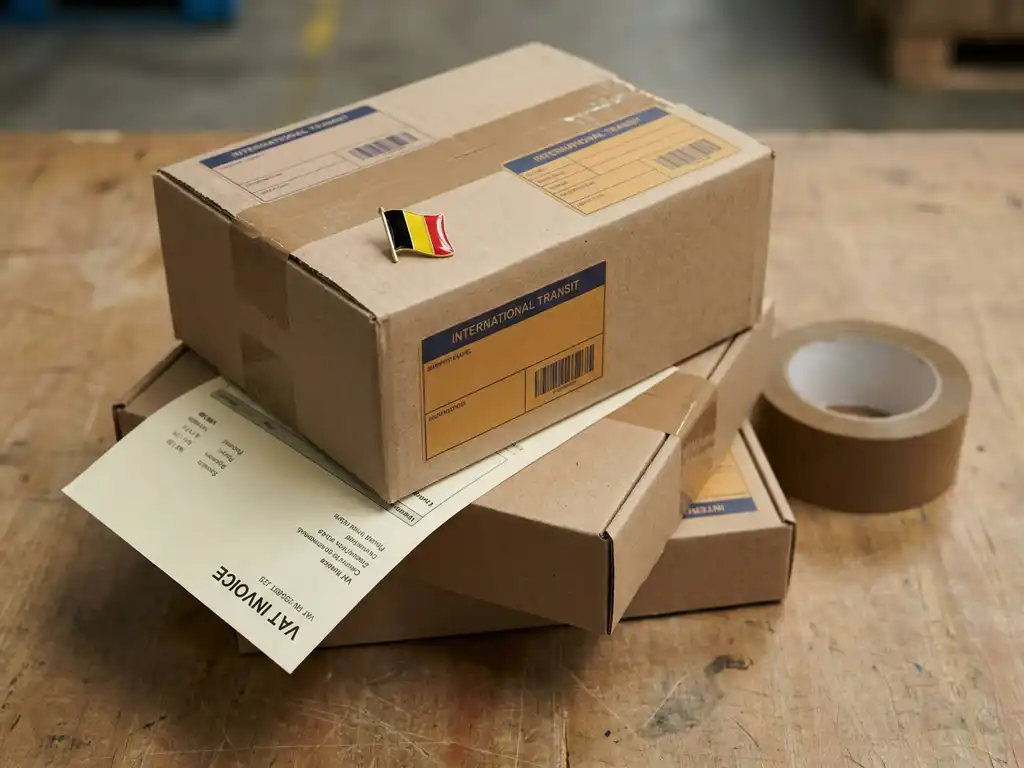

Cdiscount offers two main fulfillment options for marketplace sellers: self-fulfillment, where you manage your own storage and shipping, and Fulfillment by Cdiscount (FBC), where Cdiscount handles warehousing, packing, and delivery on your behalf. The right choice depends on your order volume, logistics capabilities, and growth ambitions. This article walks through how each option works, what it costs, and which approach makes the most sense for sellers looking to scale on Cdiscount.
How does Cdiscount handle order fulfillment for marketplace sellers?
Cdiscount gives marketplace sellers two distinct paths for fulfilling orders: managing logistics independently or outsourcing them to Cdiscount’s own fulfillment network. Self-fulfillment means you store, pack, and ship orders yourself. Fulfillment by Cdiscount (FBC) means you send your stock to Cdiscount’s warehouse, and Cdiscount takes care of the rest whenever an order comes in.
Both options are available through the Cdiscount Marketplace platform, and sellers can in principle use a combination of both depending on their product catalog. The core difference lies in where responsibility for logistics sits and how much operational control you want to retain. For sellers entering the French market or scaling quickly, understanding this distinction is a foundational step.
What is Fulfillment by Cdiscount (FBC) and how does it work?
Fulfillment by Cdiscount (FBC) is a managed logistics service where sellers send their inventory to a Cdiscount warehouse, and Cdiscount takes over all downstream operations: storage, order picking, packing, shipping, and returns processing. Once your stock is checked in, every order placed on the marketplace is fulfilled automatically by Cdiscount’s logistics team.
The process works in three broad stages:
- Stock inbound: You prepare and ship your products to Cdiscount’s designated fulfillment center following their labeling and packaging guidelines.
- Storage and management: Cdiscount stores your inventory and monitors stock levels. You can track availability through the seller portal.
- Order fulfillment: When a customer places an order, Cdiscount picks, packs, and dispatches the item. They also manage any returns that come back.
A key advantage of FBC is that products fulfilled through this service often receive a visibility boost on the platform, as Cdiscount tends to favor FBC listings in search results and may flag them with delivery badges that increase buyer confidence. This is particularly relevant in France, where Cdiscount is one of the dominant marketplaces and buyer expectations around delivery speed are high.
What are the fees associated with Cdiscount’s FBC service?
FBC fees on Cdiscount are structured around three main cost components: inbound handling fees, storage fees, and fulfillment fees per order. The exact rates depend on the size and weight of your products, and Cdiscount publishes its fee schedule in the seller portal. There is no flat monthly subscription required to use FBC, but each component is charged separately.
Here is a general breakdown of what sellers can expect to pay:
- Inbound fees: Charged when your stock arrives at the warehouse and is processed into the system. These cover receiving and labeling.
- Storage fees: Calculated based on the volume of space your products occupy, typically on a per-cubic-meter or per-unit basis. Fees may increase for slow-moving inventory held over longer periods.
- Fulfillment fees per order: Charged each time an order is picked, packed, and shipped. These vary by product dimensions and weight categories.
- Return handling fees: Applied when a customer returns a product and Cdiscount processes it back into your stock or disposes of it.
Because fee structures are subject to change and depend heavily on your product profile, it is worth running a margin calculation before committing significant stock to FBC. Sellers with low average order values or very bulky products may find that fulfillment costs eat significantly into their margins.
What’s the difference between FBC and self-fulfillment on Cdiscount?
The core difference between FBC and self-fulfillment on Cdiscount is who controls and executes the logistics. With self-fulfillment, you retain full control over storage, packing, and shipping but are also fully responsible for meeting Cdiscount’s delivery standards. With FBC, you hand over operational control to Cdiscount in exchange for convenience and potential visibility benefits.
Self-fulfillment: control with responsibility
Self-fulfillment suits sellers who already have a reliable logistics setup, whether that is an in-house warehouse or a third-party logistics provider. You ship directly to the customer and set your own delivery promises. The upside is flexibility: you can adjust packaging, prioritize certain orders, and avoid Cdiscount’s storage fees. The downside is that you must consistently meet the platform’s performance metrics for delivery time and reliability. Falling short can result in lower visibility or account penalties.
FBC: convenience with cost
FBC removes the day-to-day logistics burden entirely. Cdiscount handles everything after the stock arrives at its warehouse, which means fewer operational decisions for the seller. Products fulfilled by Cdiscount also tend to be eligible for faster delivery promises, which can improve conversion rates. The trade-off is that you pay for every step of the process and have less visibility into exactly how your products are handled. FBC also requires you to forecast demand carefully to avoid excess storage charges or stockouts.
Which fulfillment option is best for scaling on Cdiscount?
For most sellers looking to scale on Cdiscount, FBC is the stronger option once order volumes justify the fees. It removes operational bottlenecks, enables faster delivery promises, and frees up your team to focus on product selection, pricing, and marketing rather than logistics. Self-fulfillment can work well at lower volumes or when you have a highly efficient existing logistics operation.
The decision ultimately comes down to three factors:
- Order volume: Higher volumes make FBC fees more predictable and often more cost-efficient per unit than managing logistics yourself at scale.
- Product profile: Standard-sized, fast-moving products are well suited to FBC. Oversized, fragile, or slow-moving items may carry disproportionate storage and handling fees.
- Operational capacity: If you do not have a dedicated logistics team or warehouse infrastructure, FBC eliminates a significant operational dependency.
A hybrid approach is also viable: use FBC for your bestsellers to maximize visibility and delivery speed, while self-fulfilling slower or more complex products where you want more control over handling.
How Distrilink helps with Cdiscount fulfillment
Navigating Cdiscount’s fulfillment options is just one piece of the puzzle when you are trying to grow on European marketplaces. At Distrilink, we help brands activate and scale quickly without needing to build their own marketplace team, IT infrastructure, or logistics setup from scratch. Instead of spending months figuring out the operational side, brands can work with us to get moving immediately.
Here is what we take off your plate:
- Marketplace activation and account management across all major European platforms, including Cdiscount
- Fulfillment and logistics through our own in-house warehouse, giving you flexibility on volume, product type, and delivery speed
- Content creation and listing optimization to maximize visibility and conversion on each marketplace
- Performance tracking and reporting through our Distrilink Acceleration Platform, where all products and channels are managed centrally
- Customer service handling, so your buyers get a consistent, professional experience
We represent more than 25 brands and are connected to all major European marketplaces. Whether you want to launch on Cdiscount for the first time or optimize an existing presence, we handle the full operational execution so you can scale without added complexity. Get in touch with us to discuss how we can help your brand grow on Cdiscount and beyond.
Frequently Asked Questions
Can I switch from self-fulfillment to FBC mid-way through selling on Cdiscount?
Yes, you can transition from self-fulfillment to FBC without closing or recreating your listings. The process involves preparing your inventory according to Cdiscount’s inbound guidelines and shipping it to their fulfillment center. However, it is worth planning the transition carefully to avoid a gap in stock availability during the switchover, especially if you have active listings with strong sales velocity.
What happens to my FBC stock if a product stops selling or I want to exit the marketplace?
If a product becomes slow-moving, Cdiscount will continue charging storage fees for as long as your inventory remains in their warehouse, which can erode margins over time. You have the option to request a stock removal, though removal fees typically apply. If you decide to exit the marketplace entirely, you will need to arrange for your remaining stock to be shipped back to you or disposed of, both of which carry associated costs. Monitoring your sell-through rates regularly is essential to avoid unnecessary storage charges.
How strictly does Cdiscount enforce delivery performance metrics for self-fulfillment sellers?
Cdiscount monitors seller performance closely and uses metrics such as on-time delivery rate, order cancellation rate, and customer satisfaction scores to assess seller quality. Consistently underperforming against these benchmarks can result in reduced listing visibility, lower placement in search results, or in severe cases, account suspension. If you are self-fulfilling, it is critical to set realistic delivery promises and have a reliable carrier setup before going live on the platform.
Is FBC on Cdiscount worth it for sellers with a small product catalog or low order volumes?
For sellers with a very small catalog or low monthly order volumes, FBC fees can be disproportionately high relative to revenue, particularly the per-unit storage and inbound handling charges. In these cases, self-fulfillment or partnering with a third-party logistics provider that already has marketplace integrations may be more cost-effective. FBC tends to deliver its best return on investment once you have a steady, predictable volume of orders for standard-sized products.
Do FBC products automatically get better rankings on Cdiscount, or are there other factors involved?
FBC does provide a visibility advantage, as Cdiscount tends to favor its own fulfilled listings in search results and may display delivery badges that improve buyer trust and conversion. However, ranking on Cdiscount is also influenced by competitive pricing, listing quality, sales history, and customer review scores. Using FBC gives you a structural advantage, but it does not replace the need for well-optimized product listings and a competitive pricing strategy.
What are the most common mistakes sellers make when setting up FBC for the first time?
The most frequent mistakes include sending inventory without following Cdiscount’s labeling and packaging requirements precisely, which can lead to inbound rejections or processing delays. Sellers also commonly underestimate storage fees by sending in more stock than they can realistically sell within a short period. A third common error is failing to account for return handling costs in the margin calculation, which can be significant in product categories with higher return rates such as electronics or apparel.
Can non-French sellers use FBC on Cdiscount, and are there any additional requirements for cross-border sellers?
Yes, international sellers can use FBC on Cdiscount, but there are additional considerations to navigate. Cross-border sellers need to ensure their products comply with French and EU regulatory requirements, including labeling in French where applicable, and must handle VAT registration in France if their sales exceed the relevant threshold. Shipping inventory into France from abroad also adds inbound logistics costs that should be factored into your FBC margin calculations before committing to the service.