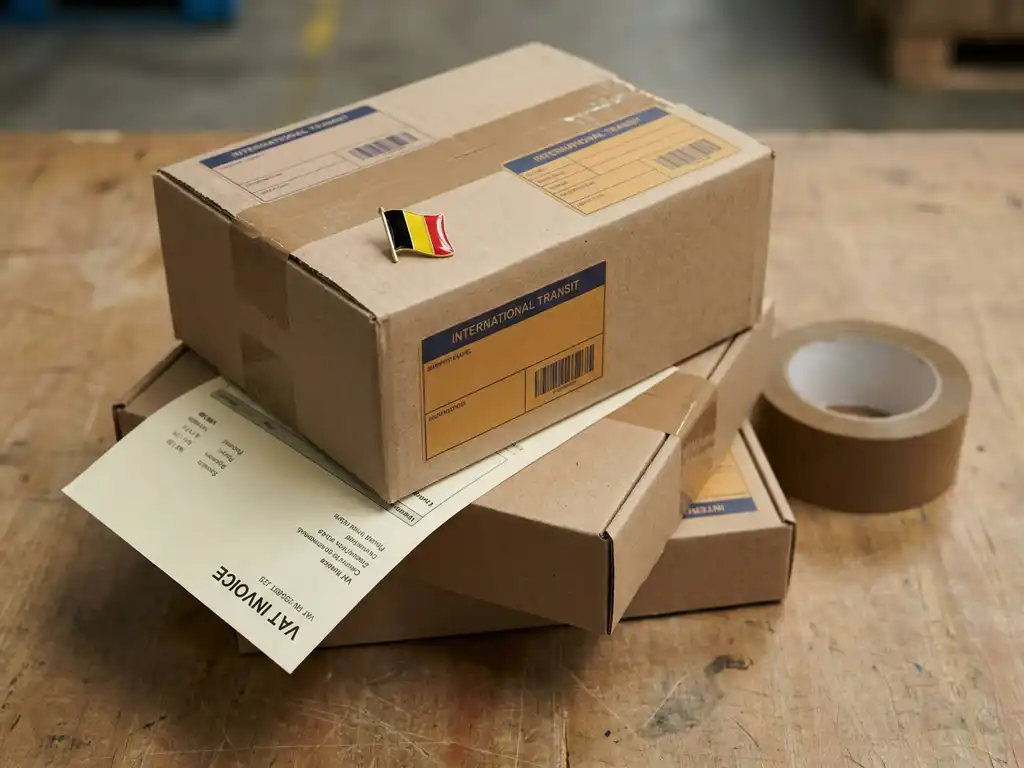

Handling VAT compliance when selling via eBay means understanding a combination of eBay’s own tax collection obligations and your personal registration duties as a seller. In many cases, eBay automatically collects and remits VAT on transactions where marketplace facilitator rules apply, but this does not remove all of your VAT responsibilities. The sections below walk through the most important questions every eBay seller should be able to answer in 2026.
Does eBay collect VAT on your behalf?
eBay collects and remits VAT on your behalf for certain transactions, but not all of them. Under marketplace facilitator legislation in the UK and across the EU, eBay is required to collect VAT on sales made by non-resident sellers to consumers in those regions, as well as on low-value imports below specific thresholds. This automatic collection applies to qualifying transactions only.
For sales between resident sellers and buyers within the same country, or for higher-value B2B transactions, the responsibility for charging and remitting VAT typically remains with you as the seller. It is important not to assume that because eBay handles some VAT, it handles all of it. Reviewing your specific seller situation, including where you are established, where your buyers are located, and the nature of your products, determines exactly how much of the VAT burden eBay absorbs versus what you must manage independently.
When do you need to register for VAT as an eBay seller?
You need to register for VAT as an eBay seller when your taxable turnover exceeds the registration threshold in any country where you are established or where you store goods. In the UK, the current threshold is £90,000 in a rolling 12-month period. EU countries each have their own thresholds, though the EU’s One Stop Shop (OSS) scheme simplifies registration for cross-border sales within the bloc.
Beyond turnover thresholds, registration may be required immediately in certain situations regardless of revenue:
- You store inventory in a foreign country, such as using a third-party warehouse or fulfilment centre in Germany or France
- You import goods into the EU or UK for sale
- You sell goods that are already located in a country at the point of sale
- You exceed the EU’s distance selling threshold of €10,000 per year for cross-border sales to EU consumers
Registering proactively before you hit a threshold is generally advisable if you are scaling quickly, because retrospective registration and back-payment of VAT can create significant administrative and financial strain.
How does VAT work for cross-border eBay sales in Europe?
For cross-border eBay sales within Europe, VAT is charged based on the destination country, meaning the rate applied is the one in force where your buyer is located. The EU’s OSS scheme allows sellers established in an EU member state to register for VAT in just one country and report all intra-EU B2C sales through a single quarterly return, rather than registering separately in each country.
For sellers based outside the EU, the Import One Stop Shop (IOSS) scheme covers the import of goods valued at €150 or less into the EU. When you use IOSS, VAT is collected at the point of sale and declared through a single monthly return. For goods above €150, import VAT and customs duties apply at the border, and the buyer or a customs agent typically handles the process unless the seller has made prior arrangements.
In the UK, post-Brexit rules mean that EU sellers shipping goods to UK buyers must comply with UK VAT rules separately from EU rules. eBay’s marketplace facilitator obligations cover some of these imports, but sellers shipping higher-value goods or operating at scale should verify their obligations directly with HMRC rather than relying solely on eBay’s automatic handling.
What VAT records must eBay sellers keep?
eBay sellers are required to keep detailed VAT records for a minimum of five to ten years depending on the jurisdiction, covering every taxable transaction. Proper VAT record-keeping is not just a legal obligation; it is your primary protection in the event of a tax authority audit.
The records you must maintain typically include:
- Sales invoices or transaction records showing the date, buyer location, item description, and VAT amount charged
- Purchase invoices for goods and services on which you have reclaimed input VAT
- Import and export documentation for cross-border shipments
- VAT returns submitted to each relevant tax authority
- Evidence of eBay’s VAT collection where the marketplace has acted as the facilitator
- Records of any VAT registration numbers held in foreign countries
eBay provides sellers with transaction reports and tax documentation through Seller Hub, which can serve as a starting point for your records. However, these reports should be supplemented with your own bookkeeping system to ensure completeness, especially if you sell across multiple channels beyond eBay.
What happens if you don’t comply with VAT rules on eBay?
Non-compliance with VAT rules as an eBay seller can result in financial penalties, back-payment of unpaid VAT with interest, and in serious cases, criminal prosecution for deliberate evasion. Tax authorities across the EU and UK have significantly increased their ability to obtain transaction data directly from marketplaces, making it far easier to identify sellers who are not meeting their obligations.
Beyond financial consequences, non-compliance can affect your ability to continue selling. eBay cooperates with tax authorities and may suspend or restrict seller accounts where compliance issues are flagged. In the EU, tax authorities have the power to hold a marketplace jointly liable for uncollected VAT in certain circumstances, which creates strong incentives for platforms to enforce seller compliance actively.
The most common compliance failures among eBay sellers include failing to register in countries where they store goods, not applying the correct VAT rate for the buyer’s country, and assuming eBay’s facilitator role covers all transactions. Working with a VAT specialist or a dedicated e-commerce partner is the most reliable way to avoid these pitfalls, particularly as you scale into new markets.
How Distrilink helps with VAT compliance and marketplace growth
Managing eBay VAT compliance is just one layer of the operational complexity that comes with scaling on online marketplaces. At Distrilink, we help brands grow quickly and in a controlled way across all major European marketplaces, without having to build an entire in-house marketplace team, IT infrastructure, or logistics operation from scratch.
Through a data-driven and standardised approach, supported by our own platform and fulfilment capabilities, we take on the full operational execution for our clients:
- Marketplace activation and account management across all key European platforms
- Content creation, advertising, and performance optimisation
- Logistics, warehousing, and fulfilment handled in-house
- Customer service management across markets
- Centralised product and order management through our Distrilink Acceleration Platform
We currently represent more than 25 brands and are connected to all major European marketplaces. Brands that work with us can expand their e-commerce operations without added complexity, with speed, control, and clear insight into their performance at every stage. If you are ready to scale your brand on marketplaces without the operational burden, get in touch with us and we will show you exactly how we can help.
Frequently Asked Questions
Can I reclaim input VAT on stock and business expenses as an eBay seller?
Yes, if you are VAT-registered, you can reclaim input VAT on eligible business purchases such as stock, packaging, shipping materials, and software tools, provided you hold valid VAT invoices for those expenses. However, you can only reclaim input VAT proportionate to your taxable sales — if some of your sales are exempt or outside the scope of VAT, your reclaim may need to be apportioned. Keep in mind that input VAT reclaimed on transactions where eBay acts as the marketplace facilitator and remits the output VAT on your behalf can create nuances, so it is worth confirming the correct treatment with a VAT adviser.
Do I need a separate VAT number for each EU country I sell into?
Not necessarily — this depends on how you sell and where you store your goods. If you are selling cross-border from a single EU country without holding stock abroad, registering for the EU’s One Stop Shop (OSS) scheme allows you to report all intra-EU B2C sales through one return in your country of establishment. However, if you store inventory in multiple EU countries (for example, using fulfilment centres in Germany and France), you will typically need a local VAT registration in each of those countries regardless of the OSS scheme. Always verify your obligations based on your specific fulfilment model.
What is the difference between OSS and IOSS, and which one do I need as an eBay seller?
OSS (One Stop Shop) is designed for sellers already established in the EU who make cross-border B2C sales of goods or services within the EU — it consolidates all intra-EU VAT reporting into a single quarterly return. IOSS (Import One Stop Shop) is specifically for sellers importing goods valued at €150 or less into the EU from outside the bloc, allowing VAT to be collected at the point of sale and reported via a single monthly return. As an eBay seller, which scheme applies to you depends on where you are based and whether your goods are already inside the EU at the point of sale — many sellers operating from outside the EU will find IOSS more relevant for low-value shipments, while EU-based sellers scaling cross-border will benefit most from OSS.
What are the most common VAT mistakes eBay sellers make when expanding into new European markets?
The most frequent mistake is assuming that eBay’s marketplace facilitator role covers all VAT obligations across every transaction, when in reality it only applies to specific qualifying sales. Sellers also commonly fail to register for VAT in countries where they store goods — even temporarily in a third-party warehouse — which triggers an immediate registration requirement regardless of turnover. A third common error is applying a flat or home-country VAT rate to all sales rather than the destination country’s applicable rate, which can result in undercharging VAT and facing a retrospective liability. Conducting a VAT health check before entering each new market is the most effective way to avoid these costly oversights.
How do I know which transactions eBay has collected VAT on and which ones are still my responsibility?
eBay provides tax transaction reports through Seller Hub that detail which sales had VAT collected and remitted by eBay under its marketplace facilitator obligations. You should download and review these reports regularly — ideally monthly — and cross-reference them against your own sales records to identify any transactions that fall outside eBay’s automatic collection. Transactions involving business buyers (B2B), higher-value imports, or sales in countries where eBay’s facilitator rules do not apply will typically remain your responsibility. If the reports are unclear, eBay’s Seller Centre documentation provides country-specific guidance on exactly which transaction types are covered.
Should I use accounting software or hire a VAT specialist to manage my eBay VAT compliance?
For sellers operating in a single market with straightforward sales, a good accounting software package such as Xero, QuickBooks, or a dedicated e-commerce tax tool like Taxdoo or Avalara can handle most of the day-to-day VAT tracking and return preparation. However, once you are selling across multiple EU countries, storing goods abroad, or dealing with mixed B2B and B2C sales, the complexity increases significantly and the cost of errors far outweighs the cost of professional advice. A VAT specialist with e-commerce experience can identify obligations you may have missed, manage registrations in multiple jurisdictions, and ensure your records are audit-ready — making their involvement a practical investment rather than an optional extra at scale.
What should I do if I realise I should have been registered for VAT but wasn't?
If you discover you have been trading above a VAT threshold without being registered, you should act quickly rather than waiting for a tax authority to contact you — voluntary disclosure is consistently treated more favourably than being identified through an audit or marketplace data request. Contact the relevant tax authority (HMRC in the UK, or the appropriate national authority in each EU country) to register and disclose the outstanding liability, including any VAT that should have been charged and remitted during the unregistered period. You may face penalties and interest on the unpaid VAT, but these are typically reduced for voluntary disclosures made in good faith. Engaging a VAT specialist to manage the disclosure process is strongly recommended, as the calculations and negotiations involved can be complex.