
Kaufland’s fulfillment network gives marketplace sellers two main options: handle shipping themselves or hand logistics over to Kaufland Fulfillment (KFL), the platform’s managed warehousing and delivery service. KFL lets sellers store inventory in Kaufland’s facilities, where the platform picks, packs, and ships orders on their behalf. If you want to sell on Kaufland efficiently at scale, understanding how these fulfillment paths differ is essential to making the right operational choice.
What fulfillment options does Kaufland offer to marketplace sellers?
Kaufland marketplace sellers can choose between two fulfillment models: self-fulfillment, where the seller manages their own warehouse, packing, and shipping, and Kaufland Fulfillment (KFL), where Kaufland handles storage, picking, packing, and delivery from its own logistics network. A third hybrid approach is also possible, using KFL for fast-moving lines and self-fulfillment for slower or bulkier products.
Self-fulfillment gives sellers full control over their supply chain, packaging presentation, and dispatch timing. It suits businesses that already have reliable logistics infrastructure or that sell products requiring special handling. KFL, by contrast, offloads the operational burden entirely and typically unlocks better delivery promises to end customers, which can improve conversion rates and Buy Box visibility on the platform.
How does Kaufland Fulfillment (KFL) work step by step?
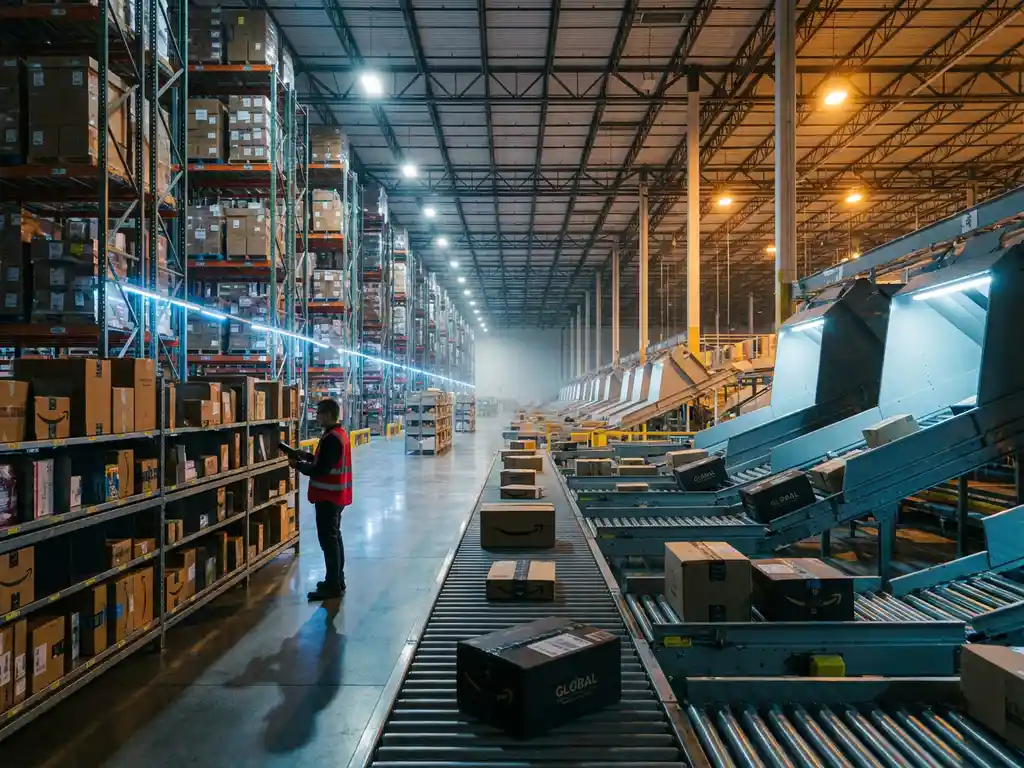
Kaufland Fulfillment works by having sellers send their inventory to a designated Kaufland warehouse in advance. Once stock arrives and is processed, Kaufland takes over every step of the order journey: receiving the customer order, picking the correct items, packing them, dispatching the parcel, and managing delivery tracking. Sellers monitor stock levels and order activity through the Kaufland seller portal.
The practical flow looks like this:
- Onboarding and labelling: Sellers register for KFL through their Kaufland seller account and prepare products according to Kaufland’s labelling and packaging requirements.
- Inbound shipment: Stock is sent to the assigned Kaufland fulfillment center. Kaufland confirms receipt and books the inventory into the system.
- Live listings: Once inventory is active, listings display Kaufland’s delivery promise to shoppers, often same-day or next-day dispatch depending on the product category and region.
- Order processing: When a customer places an order, Kaufland’s warehouse team picks, packs, and ships the parcel without any action required from the seller.
- Returns handling: Returned items are processed by Kaufland and either restocked or flagged for seller review, depending on condition.
This end-to-end model means sellers can focus on sourcing, pricing strategy, and marketing rather than daily logistics operations.
What are the costs of using Kaufland Fulfillment?
Kaufland Fulfillment costs typically include inbound processing fees, storage fees calculated by volume or pallet space over time, and per-order fulfillment fees that cover picking, packing, and shipping. The exact fee structure depends on product dimensions, weight, and the current Kaufland fee schedule published in the seller portal. There are no publicly fixed rates, as Kaufland updates its pricing periodically.
Sellers should account for several cost components when evaluating KFL:
- Inbound fees: Charged when stock arrives at the fulfillment center and is processed into inventory.
- Storage fees: Ongoing costs based on the volume or number of units held in the warehouse. Long-term storage of slow-moving stock can accumulate quickly.
- Fulfillment fees per order: Cover the physical pick, pack, and dispatch of each shipment, scaled by size and weight.
- Return processing fees: Applied when items come back and need to be inspected and restocked.
To assess whether KFL is financially viable, sellers should model their average order value, product dimensions, and expected monthly sales volume against these combined fees. For high-volume, compact products, KFL often delivers a strong cost-per-order ratio. For bulky or low-margin items, the economics may favor self-fulfillment.
What products are eligible for Kaufland Fulfillment?
Most standard consumer goods sold on the Kaufland marketplace are eligible for Kaufland Fulfillment, but certain product categories are excluded or require additional approval. Hazardous materials, oversized freight, temperature-sensitive goods, and items requiring special regulatory handling are generally not accepted into KFL warehouses.
Eligible products typically share these characteristics:
- Non-hazardous and non-flammable
- Within standard size and weight thresholds defined by Kaufland
- Properly labelled with barcodes that match the Kaufland catalog
- Suitable for ambient storage conditions
Sellers dealing in categories such as electronics, home goods, toys, beauty, or apparel generally find KFL straightforward to access. If you are unsure whether your product range qualifies, Kaufland’s seller support team can confirm eligibility before you invest in inbound shipments.
How does Kaufland’s fulfillment network compare to Amazon FBA?
Kaufland Fulfillment and Amazon FBA follow the same core model: sellers send stock to the platform’s warehouse, and the platform ships orders on their behalf. The key differences lie in geographic reach, fee complexity, and audience size. Amazon FBA operates across a much larger international network with higher traffic volume, while Kaufland Fulfillment is focused primarily on the German-speaking market, particularly Germany, Austria, and the Czech Republic.
Reach and audience
Amazon attracts a broader international shopper base and offers pan-European FBA programs that let one inventory pool serve multiple countries. Kaufland’s fulfillment network is more regionally concentrated, making it particularly strong for sellers targeting German-speaking consumers specifically. For brands that want depth in that market rather than breadth across Europe, Kaufland can be a highly effective channel.
Fee structure and competition
Amazon FBA fees are well-documented and competitive, but the platform is also significantly more crowded. Kaufland’s marketplace tends to have lower seller density in many categories, which can mean better organic visibility for new entrants. KFL fees are generally considered competitive, though sellers should always compare total landed cost per order across both platforms for their specific product mix.
When should a seller choose self-fulfillment over KFL?
Self-fulfillment is the better choice when a seller has existing logistics infrastructure, sells bulky or low-margin products where KFL fees would erode profitability, or needs packaging customization that a third-party warehouse cannot accommodate. It also suits sellers testing the Kaufland marketplace at low volume before committing to inbound shipments.
Specific scenarios where self-fulfillment makes more sense include:
- Large or heavy products: Oversized items often attract disproportionately high KFL fees relative to their sale price.
- Low sales velocity: If products move slowly, storage fees in a KFL warehouse accumulate and reduce margins.
- Branded unboxing requirements: Sellers who invest in custom packaging or inserts may prefer to control the fulfillment process directly.
- Existing 3PL relationships: Businesses already working with a third-party logistics provider can route Kaufland orders through that same infrastructure without duplicating costs.
- Initial market testing: Before scaling on Kaufland, some sellers prefer to validate demand through self-fulfillment before investing in inbound stock.
The decision is rarely permanent. Many sellers start with self-fulfillment, validate their Kaufland sales performance, and then migrate their best-selling lines to KFL once volume justifies the switch.
How Distrilink helps you scale on Kaufland
Navigating Kaufland’s fulfillment options, fee structures, and listing requirements takes time and expertise that most brands would rather spend elsewhere. At Distrilink, we help brands grow quickly and in a controlled way on online marketplaces like Kaufland, without having to build a full marketplace team, IT structure, or logistics setup from scratch.
Here is what we take off your plate:
- Marketplace activation: We handle your Kaufland account setup, catalog integration, and listing optimization from day one.
- Fulfillment management: Whether through KFL or our own in-house warehouse, we manage inventory, inbound shipments, and order flow so you do not have to.
- Full operational execution: From pricing strategy and advertising to customer service and returns, we cover the entire operation through our Distrilink Acceleration Platform.
- Performance visibility: You get clear, data-driven insight into how your brand is performing across all channels, without the complexity of managing it yourself.
- European marketplace reach: We represent more than 25 brands and are connected to all major European marketplaces, so scaling beyond Kaufland is a natural next step.
Brands that work with us can expand their e-commerce presence with speed and control, without adding operational complexity. Ready to activate and scale on Kaufland? Get in touch with our team and we will map out the right fulfillment and marketplace strategy for your brand.
Frequently Asked Questions
How long does it take to get started with Kaufland Fulfillment (KFL)?
The onboarding timeline for KFL typically ranges from a few days to a couple of weeks, depending on how quickly you complete the registration in your Kaufland seller account, prepare your products to meet labelling requirements, and arrange your first inbound shipment. To avoid delays, ensure your product barcodes match the Kaufland catalog and that your packaging complies with KFL guidelines before sending stock. Getting these details right upfront prevents inbound shipments from being rejected or delayed at the fulfillment center.
Can I switch between self-fulfillment and KFL after I've already started selling on Kaufland?
Yes, switching between fulfillment methods is possible and fairly common among Kaufland sellers. You can migrate specific SKUs to KFL while keeping others under self-fulfillment, making it easy to transition your best-performing lines once you have validated demand. The key practical step is ensuring your listings are updated in the seller portal to reflect the correct fulfillment method, and that you manage inventory levels carefully during any transition period to avoid stockouts or duplicate stock commitments.
What happens to my inventory if I decide to stop using KFL?
If you choose to exit KFL, you can request a removal order through your Kaufland seller portal to have your remaining inventory returned to you or disposed of. Removal requests typically incur a per-unit fee, so it is worth factoring this into your decision when sending large quantities of slow-moving stock into the fulfillment center. Planning your inbound quantities carefully based on realistic sales forecasts helps minimize the cost and complexity of any future inventory withdrawal.
Does using Kaufland Fulfillment improve my chances of winning the Buy Box?
Yes, using KFL generally has a positive impact on Buy Box visibility because Kaufland’s own fulfillment network can offer faster and more reliable delivery promises to shoppers, which the platform’s algorithm tends to favor. Sellers using KFL benefit from Kaufland-backed dispatch speeds, often same-day or next-day, which is a significant competitive advantage over self-fulfilled listings that depend on the seller’s own carrier performance. That said, competitive pricing and strong seller metrics still play an important role alongside fulfillment method.
How should I handle slow-moving stock to avoid excessive KFL storage fees?
The most effective way to manage slow-moving stock in KFL is to monitor your inventory turnover rate regularly through the seller portal and act before long-term storage fees accumulate significantly. Practical options include running promotional pricing or advertising to accelerate sell-through, requesting a removal order to retrieve unsold units, or simply sending smaller, more frequent inbound shipments rather than large batches upfront. A good rule of thumb is to send no more than 60 to 90 days of projected sales volume per inbound shipment until you have reliable velocity data for each SKU.
Can international sellers outside Germany or Europe use Kaufland Fulfillment?
International sellers can register as Kaufland marketplace sellers and access KFL, but they need to ensure their products comply with EU and German regulatory requirements, including proper labelling, safety certifications, and VAT registration in Germany. Shipping inbound stock from outside Europe also adds lead time and import logistics complexity that domestic sellers do not face. Working with a marketplace partner or 3PL with existing European infrastructure, such as Distrilink, can significantly simplify the process for brands entering the German market from abroad.
What are the most common mistakes sellers make when setting up Kaufland Fulfillment for the first time?
The most frequent mistakes include sending inventory with incorrect or missing labels that do not match the Kaufland catalog, underestimating inbound processing times and running out of stock before the first shipment is activated, and overcommitting large quantities of untested products before validating demand. Another common error is failing to account for all KFL fee components when setting prices, which leads to thinner margins than expected. Starting with a focused selection of your highest-confidence SKUs, rather than your full catalog, gives you a much cleaner and lower-risk introduction to the KFL system.