
Products that qualify for the Brico marketplace and Praxis marketplace fall primarily within the home improvement, DIY, and garden categories. Both platforms operate as dedicated DIY marketplaces, meaning they only accept product listings that align with their core retail assortment. If you are considering whether your products are a fit, the sections below break down exactly what each platform accepts, what they exclude, and how to make your listings stand out once you are live on Distrilink’s marketplace network.
What product categories do Brico and Praxis accept on their marketplaces?
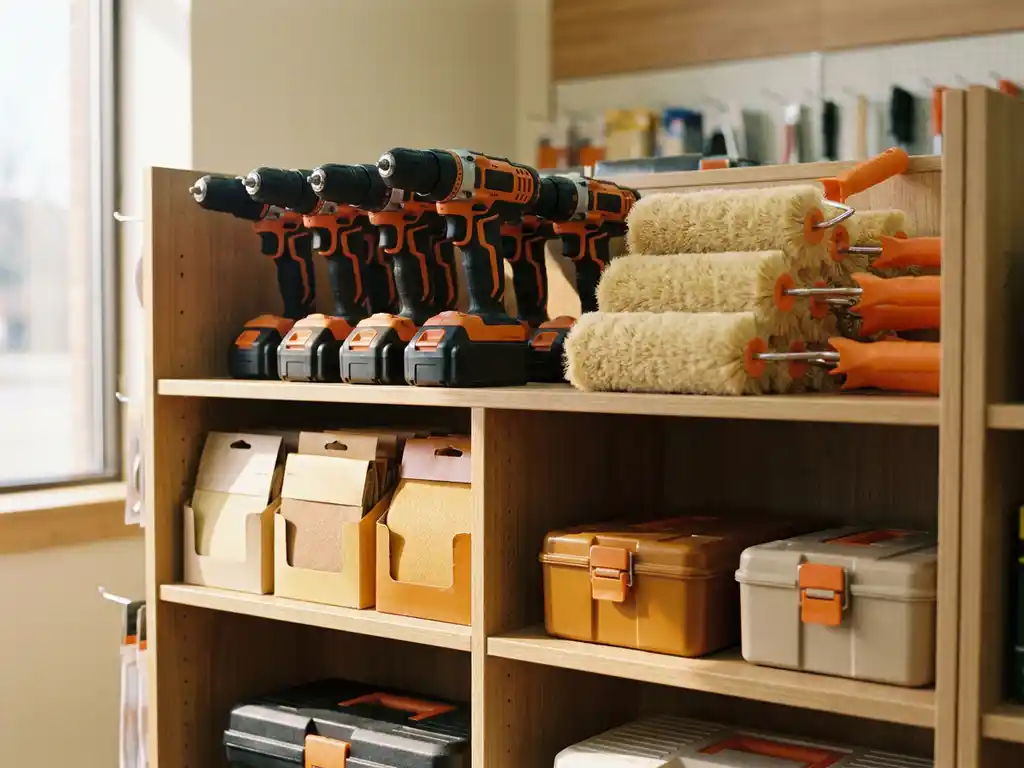
Brico and Praxis accept products that fall within the home improvement, DIY, garden, and tools categories. Both platforms focus on products that a homeowner, renovator, or professional tradesperson would typically find in a physical DIY store. This includes building materials, power tools, hand tools, paint, flooring, lighting, plumbing, garden equipment, and outdoor furniture.
More specifically, the types of product categories that tend to be accepted on both platforms include:
- Power tools and hand tools
- Paint, varnish, and wall coatings
- Flooring and tiling materials
- Electrical supplies and lighting
- Plumbing and sanitary products
- Garden tools, outdoor furniture, and planters
- Storage solutions and shelving
- Safety and protective equipment
- Cleaning products for professional or home use
- Fasteners, fixings, and adhesives
Both platforms are selective about category fit. Products that do not have a clear connection to home improvement, renovation, or garden maintenance are unlikely to be approved. If your product range spans multiple categories, only the items that fall within the DIY scope will typically be eligible.
What are the product requirements to list on Brico or Praxis?
To list products on Brico or Praxis, sellers must meet a set of content, compliance, and technical requirements. At a minimum, each product listing needs a clear product title, accurate descriptions, high-quality images, correct EAN codes, and relevant specifications such as dimensions, materials, and safety information.
Beyond the basic content requirements, both platforms expect sellers to meet the following standards:
- EAN or GTIN codes: Every product must have a valid barcode that uniquely identifies it.
- Accurate categorisation: Products must be mapped to the correct category in the platform’s taxonomy.
- Compliance documentation: Certain product types, particularly electrical goods, tools, and chemicals, require CE markings, safety data sheets, or other regulatory documentation.
- Stock availability: Both platforms expect sellers to maintain reliable stock levels and accurate inventory data.
- Competitive pricing: Listings that are significantly overpriced compared to the market may be deprioritised in search results.
The quality of your product content directly affects whether your listing gets approved and how well it performs once live. Incomplete or inaccurate data is one of the most common reasons product submissions are rejected during the onboarding process.
Are there product types that Brico and Praxis do not allow?
Yes, both Brico and Praxis exclude product types that fall outside their DIY and home improvement positioning. Products that are clearly unrelated to renovation, construction, gardening, or household maintenance will not be accepted. This includes categories like fashion, food and beverages, consumer electronics unrelated to home use, and personal care products.
In addition to category restrictions, both platforms apply general marketplace rules that prohibit:
- Products that do not comply with Belgian or Dutch consumer safety regulations
- Counterfeit or unauthorised branded goods
- Hazardous materials that cannot be safely shipped or stored
- Products without proper labelling or mandatory language requirements
- Items that violate intellectual property rights
If you are selling products in categories that sit on the border of DIY and another sector, such as smart home technology or garden leisure, it is worth checking the specific platform guidelines before investing in content creation. Borderline categories are sometimes accepted but may require additional documentation or category-specific approval.
How do Brico and Praxis differ in their product eligibility criteria?
Brico and Praxis share a broadly similar product scope, but they serve different geographic markets and have separate onboarding processes. Brico is the primary DIY marketplace in Belgium, while Praxis operates in the Netherlands. This means product listings must meet the language, labelling, and regulatory requirements of each respective market.
Key differences to be aware of include:
- Language requirements: Brico requires product content in French and Dutch, reflecting Belgium’s bilingual retail market. Praxis requires Dutch-language content for the Dutch market.
- Category depth: The two platforms may differ in how granularly they define subcategories, which affects how products are mapped during the listing process.
- Seller onboarding: Each platform has its own seller agreement, commission structure, and technical integration requirements. Connecting to both simultaneously requires managing two separate data feeds or using a centralised platform.
- Market expectations: Belgian and Dutch consumers may have different preferences around product specifications, packaging formats, and price points, which can influence which products perform well on each platform.
For brands looking to sell on both platforms at once, maintaining consistent and localised product data is essential. A single content error, such as missing a French product description for Brico, can prevent a listing from going live even if the product itself qualifies.
What makes a product listing competitive on these DIY marketplaces?
A competitive product listing on Brico or Praxis combines strong content quality, accurate categorisation, competitive pricing, and reliable fulfilment. Beyond simply meeting the minimum requirements to go live, the listings that perform best are those that give buyers all the information they need to make a confident purchase decision without leaving the product page.
The most impactful factors for competitive listings include:
- Detailed product descriptions: Explain not just what the product is, but how it is used, what it is compatible with, and what problem it solves for the buyer.
- High-quality images: Multiple angles, lifestyle shots, and close-up detail images significantly improve conversion rates on DIY platforms where buyers need to assess product quality visually.
- Complete technical specifications: For tools, materials, and equipment, buyers rely heavily on specs such as power ratings, dimensions, material grades, and compatibility information.
- Keyword-optimised titles: Titles that include the product type, brand, key specification, and relevant use case tend to rank better in platform search results.
- Competitive pricing and promotions: Both platforms feature price comparison functionality, so staying within a competitive range for your category is important for visibility.
- Positive seller metrics: Fast dispatch times, low cancellation rates, and responsive customer service all contribute to your seller score, which influences how prominently your listings appear.
Investing in content quality from the start pays off over time. Well-built listings require less maintenance, generate better organic visibility within the platform, and typically achieve higher conversion rates than listings with minimal information.
How Distrilink helps you sell on Brico and Praxis
At Distrilink, we help brands activate and scale on DIY marketplaces like Brico and Praxis without having to build the internal infrastructure themselves. Instead of assembling a marketplace team, managing technical integrations, and handling logistics from scratch, brands can launch and grow through us immediately. We represent more than 25 brands and are connected to all major European marketplaces, including the leading home improvement platforms.
Here is what we take off your plate:
- Marketplace activation: We handle account setup, category mapping, and product feed integration for both Brico and Praxis.
- Content creation and optimisation: We build and localise product listings that meet platform requirements and are optimised for search visibility and conversion.
- Logistics and fulfilment: Through our in-house warehouse, we manage stock, dispatch, and returns with the flexibility to scale up or down based on demand.
- Performance monitoring: Via our Distrilink Acceleration Platform, all products are managed centrally across marketplaces, giving you clear insight into your results at all times.
- Customer service: We handle buyer queries and post-purchase support so your brand reputation stays intact on every channel.
The result is faster time to market, lower operational complexity, and a scalable e-commerce presence, without adding headcount or building new systems internally. Ready to get your products live on Brico, Praxis, or both? Get in touch with us and we will map out the fastest route to activation for your brand.
Frequently Asked Questions
How long does it typically take to get products live on Brico or Praxis after submitting listings?
The timeline varies depending on how complete and accurate your product data is at the point of submission. If your listings meet all content, compliance, and technical requirements from the start, activation can happen within a few days to a couple of weeks. However, if products are flagged for missing EAN codes, incomplete descriptions, or lacking compliance documentation, the review process will take longer. Preparing your product data thoroughly before submission is the most effective way to avoid delays.
What should I do if my product is rejected during the onboarding process?
Start by reviewing the rejection reason provided by the platform, as this will usually point to a specific content gap or compliance issue. Common causes include missing or invalid EAN codes, incomplete technical specifications, absent regulatory documentation, or incorrect category mapping. Once you have identified and resolved the issue, you can resubmit the listing. If the rejection reason is unclear, working with a marketplace partner like Distrilink can help you diagnose the problem faster and avoid repeated rejections.
Do I need separate product listings for Brico and Praxis, or can I use the same content for both?
You will need localised versions of your listings for each platform. While the core product information can be the same, Brico requires content in both French and Dutch to serve the Belgian market, whereas Praxis requires Dutch-language content for the Netherlands. Beyond language, you may also need to adapt certain specifications or packaging details to meet the expectations of each market. Using a centralised platform or working with a partner who manages both feeds simultaneously is the most efficient way to handle this without duplicating effort.
Can I sell on both Brico and Praxis at the same time, and is it worth it?
Yes, selling on both platforms simultaneously is entirely possible and often worthwhile for brands with products that appeal to both Belgian and Dutch consumers. The two markets are geographically close but operate independently, so reaching both audiences effectively doubles your potential DIY marketplace exposure in the Benelux region. The main challenge is managing two separate data feeds, seller accounts, and localisation requirements at once, which is where a centralised marketplace management solution becomes particularly valuable.
What compliance documents do I need to prepare before listing tools or electrical products?
For power tools and electrical products, you will typically need CE marking documentation to demonstrate conformity with EU safety directives, along with an EU Declaration of Conformity. Chemical products such as adhesives, coatings, and cleaning agents usually require Safety Data Sheets (SDS) in the relevant language. It is also worth checking whether your product category falls under any additional Belgian or Dutch market surveillance regulations. Having these documents ready before you begin the listing process will prevent compliance-related delays during approval.
How important is pricing strategy when listing on Brico and Praxis, and how do I stay competitive?
Pricing plays a significant role in both listing visibility and conversion on these platforms, as both Brico and Praxis include price comparison functionality that makes it easy for buyers to evaluate options side by side. Listings that are priced significantly above the market average for their category risk being deprioritised in search results. Regularly monitoring competitor pricing within your product categories, factoring in marketplace commission when setting your prices, and participating in platform promotions where appropriate are all effective ways to maintain a competitive position.
My products sit in a borderline category, such as smart home or outdoor leisure. How do I find out if they qualify?
Borderline categories like smart home technology, outdoor leisure, or garden lifestyle products are sometimes accepted on Brico and Praxis but may require category-specific approval or additional documentation. The safest approach is to review the platform’s official seller guidelines for the relevant category before investing time in content creation. If the guidelines are ambiguous, reaching out directly to the platform or working with a marketplace specialist who has prior experience with these categories will give you a clearer answer before you commit resources to the onboarding process.