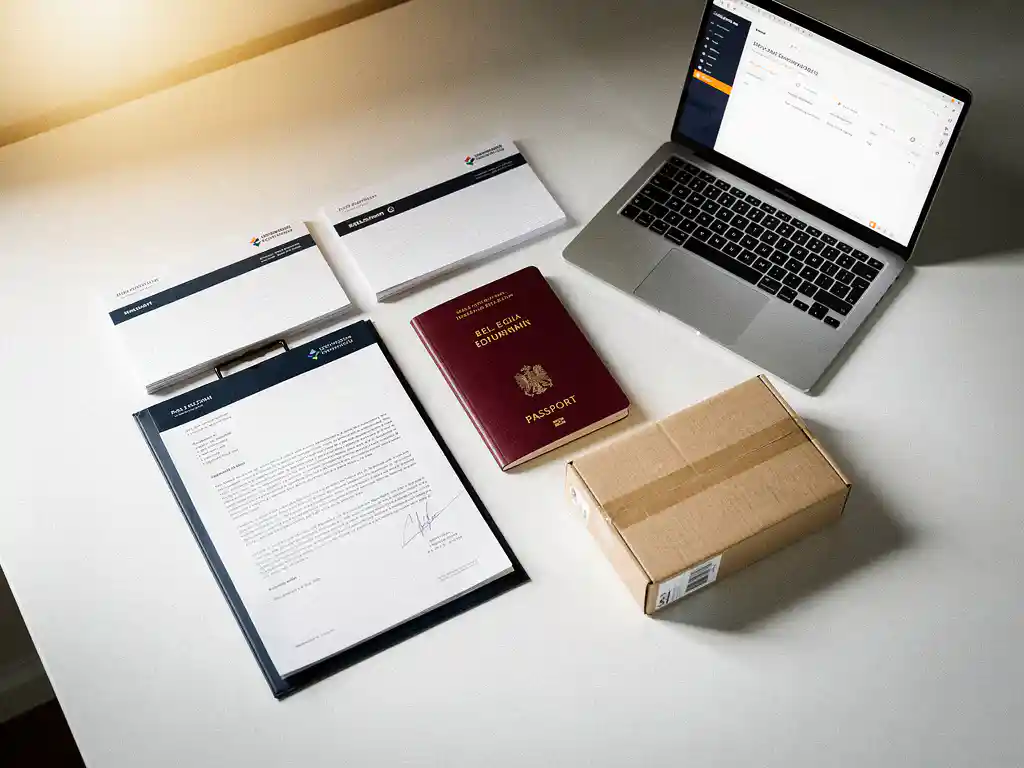

Getting started on Amazon as a seller involves more than just signing up with an email address. The registration process requires specific documents, identity verification, and an understanding of the account structure before you can list your first product. Whether you are exploring Amazon FBA as a fulfillment strategy or planning to manage your own logistics, knowing exactly what Amazon expects upfront saves you time and prevents delays.
What types of Amazon seller accounts are there?
Amazon offers two types of seller accounts: the Individual plan and the Professional plan. The Individual plan charges a small fee per item sold and suits sellers with low monthly volume. The Professional plan costs a fixed monthly subscription and is designed for businesses that sell more than 40 units per month, want access to advertising tools, and plan to scale seriously.
For most businesses entering Amazon with growth in mind, the Professional account is the logical starting point. It unlocks features like bulk listing, access to restricted categories, Amazon Ads, and the ability to compete for the Buy Box. The Individual plan works for occasional sellers testing the waters, but it quickly becomes more expensive per unit than the Professional subscription once volume picks up.
What documents do you need to open an Amazon seller account?
To register as a seller on Amazon, you need to provide a government-issued identity document, a business registration document, a bank account statement, a valid credit card, and a phone number for verification. Amazon requires these documents to comply with anti-money-laundering regulations and to confirm the legitimacy of your business before approving your account.
Here is a breakdown of what to prepare:
- Identity document: A valid passport or national identity card for the account holder
- Business registration: Official documentation confirming your company exists, such as a chamber of commerce extract or equivalent
- Bank account statement: A recent statement showing your business bank account details
- Credit card: A chargeable card to cover subscription fees and any Amazon charges
- Business address and contact details: A verifiable address and phone number
Make sure all documents are current and clearly legible. Blurry scans or expired identification are among the most common reasons Amazon delays or rejects account applications.
How does Amazon verify your identity during registration?
Amazon verifies your identity through a video call with an Amazon associate, during which you are asked to present your original identity document in front of a camera. This process, known as the identity verification interview, is a mandatory step in the registration process and typically takes place after you have submitted your documents online.
During the video call, Amazon checks that the document you present matches the one you uploaded. The associate will ask you to hold up the document, turn it to show both sides, and confirm your personal details. The call is short and straightforward as long as your documents are consistent and valid.
Amazon introduced this step as part of its effort to reduce fraudulent seller accounts. It applies to new registrations across most regions, including Europe. Scheduling the call promptly after submitting your application speeds up the overall approval timeline.
Do you need a VAT number to sell on Amazon in Europe?
Yes, a VAT number is required to sell on Amazon in Europe if your business exceeds the local VAT registration threshold or if you store inventory in an EU country. Amazon actively enforces VAT compliance and may request your VAT number during registration or when you begin selling in specific European marketplaces such as Amazon.de, Amazon.fr, or Amazon.nl.
For businesses using Amazon FBA in Europe, VAT obligations become more complex. When Amazon stores your products in a fulfillment center in Germany, France, or another EU country, you may be required to register for VAT in that country, even if your business is based elsewhere. This is sometimes referred to as the pan-European FBA model, and it creates VAT obligations in multiple countries simultaneously.
Sellers who ignore VAT requirements risk account suspension and significant back payments. It is strongly recommended to consult a tax advisor familiar with EU e-commerce regulations before activating cross-border selling or enrolling in pan-European FBA programs.
What are the most common mistakes when registering on Amazon?
The most common mistakes when registering on Amazon include submitting inconsistent information, using personal instead of business bank accounts, uploading poor-quality document scans, and failing to prepare for VAT obligations in advance. These errors frequently result in account suspensions or prolonged verification delays that can set back your launch by weeks.
Here are the mistakes to actively avoid:
- Inconsistent details: The name, address, and business information on your documents must match exactly. Any discrepancy triggers a manual review.
- Personal bank accounts: Amazon strongly prefers business bank accounts. Using a personal account can cause payment issues and raise compliance flags.
- Rushed document uploads: Low-resolution or cropped scans are a leading cause of rejection. Take time to upload clear, complete copies.
- Skipping VAT preparation: Entering European marketplaces without understanding your VAT obligations is a costly oversight, particularly for Amazon FBA sellers.
- Multiple accounts: Creating more than one Amazon seller account without explicit permission from Amazon violates its policies and can result in a permanent ban.
- Ignoring category restrictions: Some product categories require pre-approval before you can list. Attempting to list restricted products before receiving approval stalls your launch.
Taking the time to get registration right the first time is far more efficient than dealing with a suspended account or a lengthy appeals process after the fact.
How Distrilink helps you launch and scale on Amazon
Registering on Amazon is just the beginning. The real challenge is building a profitable, scalable presence across European marketplaces without getting buried in operational complexity. At Distrilink, we help brands grow quickly and in a controlled way on online marketplaces. Instead of building your own marketplace team, IT infrastructure, or logistics operation from scratch, brands can activate and scale immediately through us.
Here is what we take off your plate:
- Account setup and activation: We handle the full registration process and ensure compliance from day one
- Content and listing optimization: Product pages built to convert and rank within Amazon’s search algorithm
- Amazon FBA and fulfillment: Logistics managed through our own warehouse and fulfillment infrastructure
- Advertising and visibility: Data-driven campaigns that drive traffic and sales across all major European marketplaces
- Customer service: Full operational support so your brand delivers a consistent buyer experience
- Performance insights: Clear reporting through our platform so you always know where you stand
We represent more than 25 brands and are connected to all major European marketplaces. With a standardized, data-driven approach supported by our own platform and fulfillment capabilities, we take on the complete operational execution, from activation and optimization to logistics and customer service. Brands expand their e-commerce reach without added complexity, with speed, control, and clear visibility into their results. Ready to launch or scale on Amazon? Get in touch with us and find out how we can get your brand live on Amazon faster than you thought possible.
Frequently Asked Questions
How long does it typically take for Amazon to approve a new seller account?
Amazon account approval can take anywhere from 24 hours to several weeks, depending on how quickly you complete the identity verification video call and whether your documents pass review without issues. Submitting all documents in one go, scheduling your verification interview promptly, and ensuring everything is consistent across your application will keep you at the faster end of that timeline. Accounts that require manual review due to discrepancies or document quality issues can face delays of two to four weeks or more.
Can I sell on multiple European Amazon marketplaces with a single account?
Yes. Amazon allows you to manage multiple European marketplaces — such as Amazon.de, Amazon.fr, Amazon.nl, Amazon.it, and Amazon.es — from a single Seller Central account through the European Unified Account structure. This means you can list and sell across these marketplaces without registering separately for each one. However, selling across multiple EU countries still triggers individual VAT obligations per country, so unified account access does not eliminate the need for proper VAT registration in each market where you store or sell goods.
What happens if my Amazon seller account gets suspended during or after registration?
If your account is suspended, Amazon will send a notification outlining the reason, and you will need to submit a Plan of Action (POA) addressing the specific issue before your account can be reinstated. Common suspension triggers during registration include document inconsistencies, policy violations, or unresolved VAT issues. Acting quickly, addressing the root cause clearly in your appeal, and providing supporting documentation gives you the best chance of a successful reinstatement — but the process can take days to weeks depending on the complexity of the case.
Do I need a registered business entity to open an Amazon seller account, or can I register as an individual?
You can technically register as an individual using the Individual selling plan, but for anyone serious about selling on Amazon — especially in European markets — operating through a registered business entity is strongly recommended. A registered company gives you access to the Professional plan, makes VAT registration straightforward, and is generally required if you plan to use Amazon FBA or sell at any meaningful volume. Selling as an unregistered individual also limits your credibility with customers and your ability to scale.
What is the Buy Box and why does it matter for new sellers?
The Buy Box is the prominent ‘Add to Cart’ button on an Amazon product page, and winning it means your offer is the default purchase option when a customer clicks to buy. It matters enormously because the vast majority of Amazon sales go through the Buy Box rather than through the list of alternative sellers. New sellers on the Professional plan become eligible to compete for the Buy Box, with key factors including competitive pricing, strong seller metrics, fast fulfillment, and account health — all areas where using Amazon FBA gives sellers a significant structural advantage.
How do I know which product categories require pre-approval before I can start listing?
Amazon maintains a list of restricted or ‘gated’ categories — such as fine jewelry, medical devices, certain food products, and branded apparel — that require sellers to apply for approval before listing. You can check whether a category is gated directly in Seller Central by attempting to add a product listing; if approval is required, Amazon will prompt you to apply and outline what documentation or criteria are needed. It is worth researching category restrictions before finalizing your product selection, as approval timelines vary and some categories have strict eligibility requirements.
Is it possible to switch from an Individual plan to a Professional plan later, or should I start with Professional from day one?
You can upgrade from an Individual plan to a Professional plan at any time through your Seller Central account settings, and the switch takes effect immediately. That said, if you are entering Amazon with a clear business intent and plan to sell more than 40 units per month, starting on the Professional plan from day one is more cost-effective and gives you immediate access to advertising tools, bulk listing, and Buy Box eligibility. Upgrading later does not create any complications, but delaying access to those features can slow down your early momentum.