
Amazon’s European fulfillment network is one of the most extensive logistics infrastructures in the world, and understanding how it works can make a real difference for brands looking to reach customers across the continent. Whether you’re exploring Amazon FBA for the first time or looking to optimize an existing setup, knowing where the warehouses are, how they operate, and what they mean for your delivery performance is the foundation of any solid European marketplace strategy.
What are Amazon’s fulfillment centers in Europe?
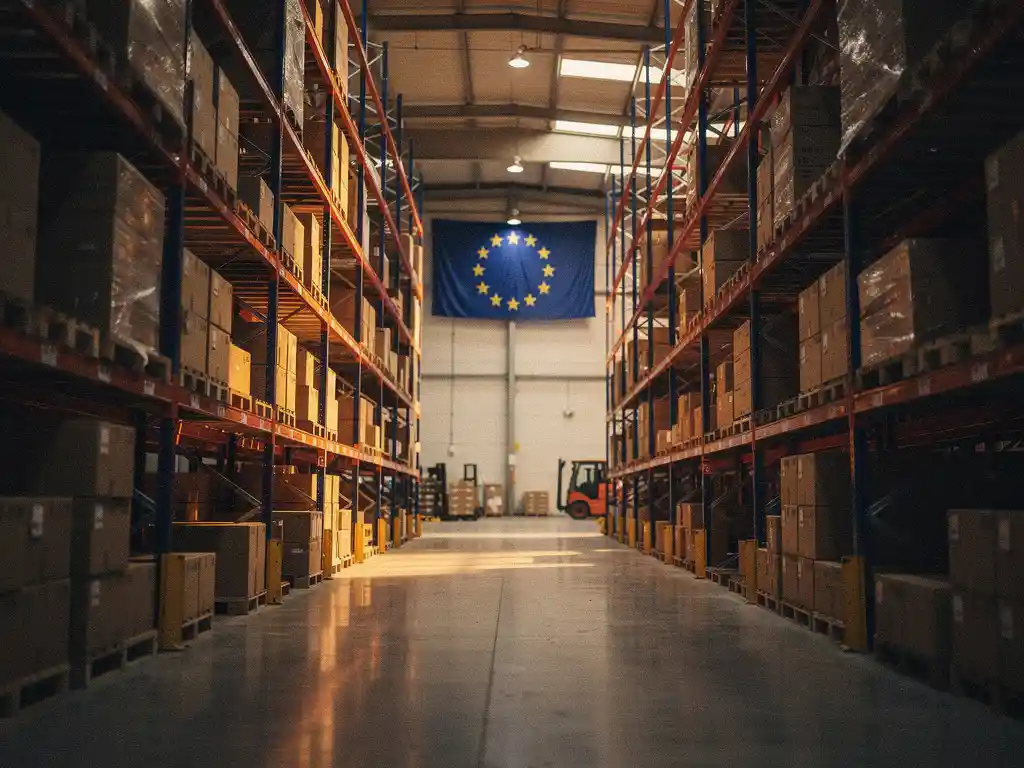
Amazon’s fulfillment centers in Europe are large-scale warehouses where Amazon stores, picks, packs, and ships products on behalf of sellers using the Fulfilled by Amazon (FBA) service. These facilities are fully operated by Amazon and are integrated into a coordinated logistics network that spans multiple countries, enabling fast and reliable delivery to customers across the continent.
Each fulfillment center is equipped with advanced automation and robotics technology to handle enormous volumes of orders efficiently. When a customer places an order, Amazon’s system identifies the nearest fulfillment center that holds the product and dispatches it from there. This distributed model is what allows Amazon to offer next-day or even same-day delivery in many European markets.
Which European countries have Amazon fulfillment centers?
Amazon operates fulfillment centers across several European countries, including the United Kingdom, Germany, France, Spain, Italy, Poland, the Czech Republic, and Sweden. Germany and the UK have the highest concentration of facilities, reflecting the size and maturity of those markets. Poland and the Czech Republic serve as important central hubs due to their geographic position within continental Europe.
The network continues to evolve as Amazon expands into new markets and increases capacity in existing ones. Countries like the Netherlands and Belgium benefit indirectly from this network through cross-border fulfillment, even without hosting major fulfillment centers of their own. For sellers, this means products stored in one country can often be used to fulfill orders in neighboring markets without additional intervention.
Where are Amazon’s largest fulfillment centers in Europe located?
Amazon’s largest European fulfillment centers are concentrated in Germany, the UK, and Poland. Germany hosts multiple mega-facilities, including large sites near Leipzig, Dortmund, and Rheinberg. In the UK, major centers are located in Rugeley, Dunfermline, and Swansea. Poland has emerged as a significant logistics hub with large facilities near Poznan, Wroclaw, and Lodz.
These larger sites typically handle a broader range of product categories and serve as regional anchors within the fulfillment network. Their size allows Amazon to store vast quantities of inventory and process high volumes of orders during peak periods such as Prime Day and the holiday season. For brands selling at scale, proximity to these major hubs can influence how quickly products are dispatched and delivered.
How does Amazon’s European fulfillment network affect delivery times?
Amazon’s European fulfillment network directly affects delivery times by enabling products to be stored close to end customers. When inventory is distributed across multiple fulfillment centers in different countries, orders can typically be dispatched within one business day, with delivery often arriving within two to three days across most of Western Europe.
Amazon uses a system called inventory placement to spread a seller’s stock across several locations automatically. This reduces the distance between stored products and buyers, which shortens transit times. Sellers who store inventory only in one country may experience longer delivery windows for customers in other markets, which can negatively affect their seller metrics and product visibility in search results.
- Pan-European FBA (Pan-EU): Allows Amazon to redistribute inventory across fulfillment centers in multiple countries, optimizing placement for speed.
- European Fulfillment Network (EFN): Products are stored in one country but can fulfill orders from other Amazon European marketplaces, with slightly longer delivery times.
- Multi-Country Inventory (MCI): Sellers manually send inventory to specific countries, maintaining more control over stock placement.
Choosing the right fulfillment model has a direct impact on how competitive your delivery promise is and how your listings perform in Amazon’s algorithm.
What is the difference between Amazon FBA and FBM in Europe?
The key difference between Amazon FBA and FBM in Europe is who handles the logistics. With FBA (Fulfilled by Amazon), Amazon stores your inventory in its fulfillment centers, picks and packs orders, and manages delivery and customer service. With FBM (Fulfilled by Merchant), the seller handles all storage, packaging, shipping, and returns independently.
For most brands scaling across European markets, FBA offers significant advantages in terms of delivery speed, Prime eligibility, and reduced operational burden. FBM can make sense for sellers with very large or slow-moving products, specialized logistics requirements, or those who already have a strong fulfillment infrastructure in place.
When does FBM make sense in Europe?
FBM is worth considering when products are oversized, have unpredictable demand cycles, or when a brand has existing warehouse capacity and wants to avoid FBA storage fees. Some sellers also use FBM as a backup fulfillment option during peak periods when FBA inventory runs low, ensuring continuity of service without gaps in availability.
How can brands use Amazon’s European fulfillment centers to scale?
Brands can use Amazon’s European fulfillment centers to scale by leveraging the Pan-European FBA program to reach customers across multiple countries from a single inventory pool. This eliminates the need to build local logistics infrastructure in each market and allows brands to compete on delivery speed with established local players from day one.
Scaling through Amazon FBA in Europe typically involves several strategic steps:
- Register for VAT in relevant countries to comply with local tax requirements when using Pan-EU FBA.
- Optimize product listings in local languages to improve discoverability in each marketplace.
- Distribute inventory strategically across fulfillment centers to minimize delivery times and storage costs.
- Monitor performance metrics such as order defect rate and late shipment rate to maintain account health.
- Use advertising tools like Sponsored Products to accelerate visibility in new markets.
The combination of Amazon’s logistics infrastructure and targeted marketplace activation allows brands to enter new European markets with significantly lower upfront investment than building their own distribution networks.
How Distrilink helps brands scale on Amazon in Europe
At Distrilink, we help brands grow quickly and in a controlled way on online marketplaces. Rather than building an entire marketplace team, IT infrastructure, or logistics operation from scratch, brands can activate and scale immediately through us. With a data-driven and standardized approach, supported by our own platform and fulfillment capabilities, we take full operational responsibility: from activation and optimization to logistics and customer service.
Concretely, this means we offer:
- Full marketplace activation on Amazon and other major European platforms, without the complexity of building it yourself.
- In-house fulfillment that integrates seamlessly with Amazon’s network, giving you flexibility in product types, volumes, and delivery timelines.
- Centralized product management through our Distrilink Acceleration Platform, keeping all your listings consistent and optimized across every channel.
- End-to-end operations including content creation, advertising, payments, and customer service, so your team can focus on what they do best.
- Representation on all major European marketplaces, with experience managing more than 25 brands across the continent.
Brands can expand their e-commerce presence without adding complexity, with speed, control, and clear insight into their performance at every step. Want to find out how we can activate your brand on Amazon’s European network? Get in touch with us at Distrilink and let’s talk about your growth strategy.
Frequently Asked Questions
Do I need to register for VAT in every European country where Amazon stores my inventory?
Yes, if you use Pan-European FBA, Amazon can move your inventory across fulfillment centers in multiple EU countries, which typically triggers VAT registration obligations in each of those countries. This means you may need to register for VAT in up to seven or more countries depending on where your stock is stored and sold. It’s strongly recommended to work with a VAT compliance specialist or a partner like Distrilink who can help you navigate these requirements before enrolling in Pan-EU FBA.
What happens to my inventory if Amazon closes or relocates a fulfillment center?
If Amazon closes or relocates a fulfillment center, they will typically transfer your inventory to another facility within the network without requiring action on your part. However, this can temporarily affect delivery times and stock availability, so it’s worth monitoring your inventory placement regularly through Seller Central. Maintaining healthy stock levels across multiple fulfillment centers reduces your exposure to disruption from any single facility change.
How much inventory should I send to Amazon's European fulfillment centers when starting out?
When starting out, it’s generally advisable to send a conservative initial shipment — enough to cover 60 to 90 days of projected sales — rather than sending large volumes upfront. This approach minimizes long-term storage fees if products move slower than expected and gives you time to validate demand in each market before committing to higher inventory levels. As you gather sales data and understand velocity by country, you can gradually increase your replenishment quantities and distribution across more fulfillment centers.
Can I sell on Amazon Europe without using FBA at all?
Yes, you can sell across Amazon’s European marketplaces using Fulfilled by Merchant (FBM), where you handle all storage, packing, and shipping yourself. However, FBM listings are not automatically eligible for the Prime badge, which can significantly reduce your conversion rates since many European shoppers filter specifically for Prime-eligible products. FBM works best as a complementary strategy — for example, covering oversized items or acting as a backup when FBA stock runs low — rather than as a primary fulfillment method for scaling across multiple markets.
What are the most common mistakes brands make when setting up Amazon FBA in Europe?
One of the most common mistakes is launching across multiple European marketplaces simultaneously without localizing product listings, which leads to poor discoverability and low conversion rates in non-English-speaking markets. Another frequent error is underestimating VAT compliance requirements, particularly when using Pan-EU FBA, which can result in penalties and account suspension. Brands also often overlook the importance of monitoring storage fees and inventory age, which can erode profitability if slow-moving stock accumulates in fulfillment centers over time.
How does Amazon decide which fulfillment center to store my inventory in?
When you use Pan-European FBA, Amazon’s algorithm automatically determines where to store and redistribute your inventory based on forecasted demand, proximity to customers, and available capacity across its fulfillment network. If you use the European Fulfillment Network (EFN) or Multi-Country Inventory (MCI), you have more control over which countries receive your stock, but you take on the responsibility of managing placement decisions yourself. For most growing brands, Pan-EU FBA offers the most efficient placement by default, though it requires full VAT compliance across all participating countries.
How long does it typically take to get a product live on Amazon's European marketplaces through FBA?
From the moment you create your product listings to the point where your items are live and fulfillable through FBA, the process typically takes between two and four weeks, depending on listing approval times, shipment processing at the fulfillment center, and any compliance checks required for your product category. Certain categories — such as health, beauty, or electronics — may require additional documentation or approval before your listing goes live. Working with an experienced marketplace partner can significantly reduce this timeline by ensuring listings, labels, and shipment plans are set up correctly from the start.