Selling on Amazon is one of the most effective ways to reach millions of shoppers across Europe and beyond. But before diving in, it helps to understand exactly how the platform works, who qualifies, and what it takes to get started. Whether you are brand new to e-commerce or an established business looking to expand your online reach, this guide answers the most important questions about Amazon FBA so you can make an informed decision. For a broader look at how marketplace selling fits into a complete e-commerce strategy, visit the Distrilink website.
What is Amazon FBA and how does it work?
Amazon FBA, which stands for Fulfillment by Amazon, is a service where Amazon stores your products in its warehouses, then picks, packs, and ships orders on your behalf. Sellers send their inventory to an Amazon fulfillment center, and Amazon handles the entire logistics chain from that point forward, including customer returns and a large part of customer service.
In practical terms, the process works like this:
- You create an Amazon seller account and enroll in FBA.
- You prepare and ship your products to one or more Amazon fulfillment centers.
- Amazon stores your inventory and lists your products on the marketplace.
- When a customer places an order, Amazon picks, packs, and ships it.
- Amazon handles delivery tracking, returns, and related customer communications.
In exchange for this service, Amazon charges fulfillment fees based on product size and weight, as well as monthly storage fees. The key benefit is that your products become eligible for Amazon Prime, which significantly increases visibility and conversion rates because Prime members actively filter for fast, free delivery.
Who is eligible to sell products via Amazon FBA?
Almost any individual or business can sell via Amazon FBA, provided they meet Amazon’s basic seller requirements. This includes sole traders, small businesses, and large corporations alike. There is no minimum revenue threshold or company size requirement, making Amazon FBA accessible to a wide range of sellers at different stages of growth.
To be eligible, you generally need to:
- Have a valid business or personal identity that can be verified by Amazon
- Provide a bank account that can receive payments
- Have a valid phone number and tax identification information
- Comply with Amazon’s seller policies and code of conduct
- Sell products that are permitted under Amazon’s restricted products guidelines
Sellers based outside of Amazon’s core markets, including businesses in Belgium and other European countries, can also sell on Amazon. You can register for Amazon Europe and sell across multiple European marketplaces from a single account using the European Fulfillment Network. This makes FBA a genuinely global opportunity for businesses of all sizes.
What types of products can you sell through Amazon FBA?
You can sell a broad range of product categories through Amazon FBA, from household goods and electronics to clothing, books, and beauty products. However, not all products are eligible, and some categories require prior approval from Amazon before you can list them.
Categories that typically require approval, also known as gated categories, include:
- Grocery and food products
- Health and personal care items
- Jewelry and watches
- Automotive parts
- Fine art
Beyond category restrictions, certain products are entirely prohibited on Amazon, including hazardous materials, counterfeit goods, and items that violate intellectual property rights. Some products, such as oversized or heavy items, are technically allowed but may incur significantly higher FBA fees, which can affect your margins. Before committing to FBA, it is worth calculating whether the fee structure makes sense for your specific product type and price point.
What are the requirements to start selling with Amazon FBA?
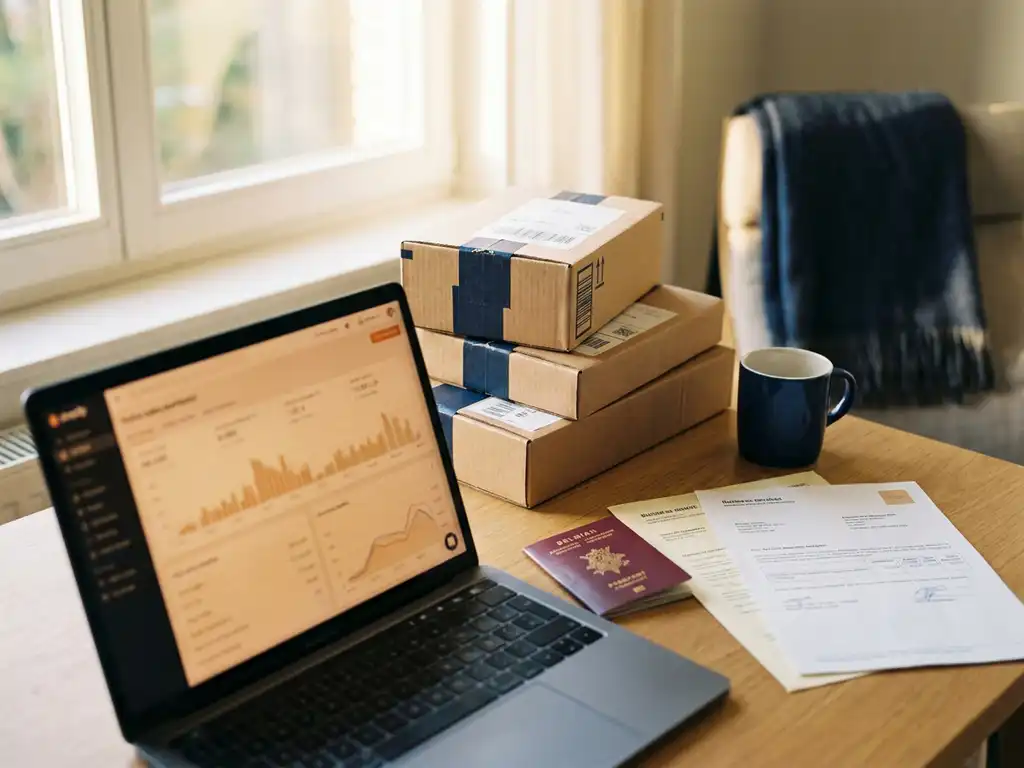
To start selling with Amazon FBA, you need an Amazon seller account, a registered business entity, compliant product listings, and inventory ready to ship to Amazon’s fulfillment centers. Beyond the basic account setup, there are several practical requirements to prepare for.
Here is what you need to have in place:
- An Amazon Seller account: You can choose between an Individual or Professional plan. The Professional plan is recommended for businesses selling more than 40 units per month.
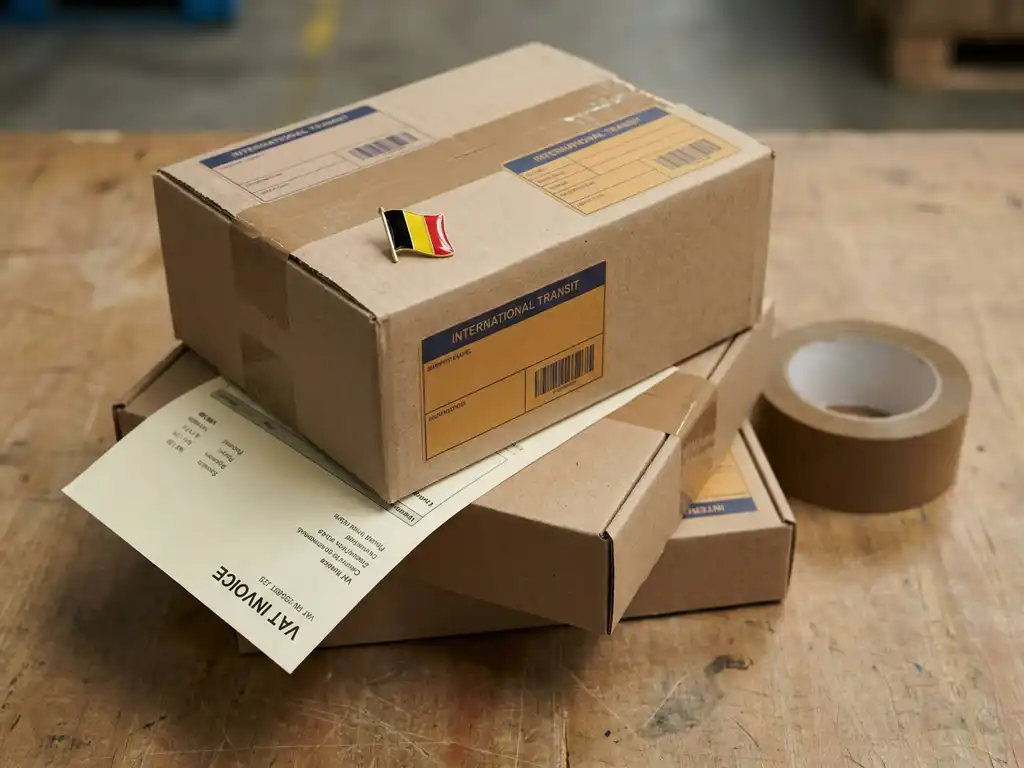
- Product barcodes: Each product needs a GTIN (such as an EAN or UPC) to be listed on Amazon.
- FBA-compliant packaging: Products must be packaged and labeled according to Amazon’s specific requirements before being shipped to a fulfillment center.
- A VAT number: If you are selling in European marketplaces, you will likely need VAT registration in the relevant countries.
- Product listings: Each item needs a complete listing with title, description, images, and pricing before Amazon can fulfill orders.
Setting up correctly from the start saves a lot of time and avoids costly mistakes such as shipments being rejected at fulfillment centers or listings being suppressed due to compliance issues.
What’s the difference between Amazon FBA and Amazon FBM?
The key difference between Amazon FBA and Amazon FBM (Fulfilled by Merchant) is who handles storage, packing, and shipping. With FBA, Amazon manages the entire fulfillment process. With FBM, the seller is responsible for storing inventory and shipping orders directly to customers.
Here is how the two models compare:
- FBA: Amazon stores your products, fulfills orders, and handles returns. Your products qualify for Prime. You pay Amazon fulfillment and storage fees.
- FBM: You store your products and ship them yourself. You have more control over packaging and logistics. Your products may not qualify for Prime unless you meet the criteria for Seller Fulfilled Prime.
FBA tends to work well for sellers with high order volumes, standardized products, and limited logistics infrastructure of their own. FBM can be more cost-effective for sellers with large, heavy, or slow-moving products where Amazon’s storage fees would eat into margins. Many experienced sellers use a hybrid approach, using FBA for their best-selling lines and FBM for the rest.
How can an e-commerce agency help you sell via Amazon FBA?
An e-commerce agency can accelerate your Amazon FBA launch by handling the technical setup, content creation, advertising strategy, and ongoing account management that would otherwise require a dedicated in-house team. For brands without prior marketplace experience, this kind of support significantly reduces the time to first sale and the risk of costly early mistakes.
Specifically, an agency can help with:
- Setting up and optimizing your Amazon seller account
- Creating product listings that are optimized for Amazon’s search algorithm
- Managing FBA shipments and inventory levels
- Running Amazon Advertising campaigns to drive visibility
- Monitoring performance metrics and adjusting strategy accordingly
- Handling customer service and returns management
For brands that want to expand beyond a single marketplace, an agency can also connect your catalog to additional platforms simultaneously, maximizing reach without multiplying your operational workload.
How Distrilink helps you scale with Amazon FBA
At Distrilink, we help brands grow quickly and in a controlled way on online marketplaces like Amazon. Rather than building your own marketplace team, IT infrastructure, or logistics operation from scratch, you can activate and scale immediately through us. Here is what we take off your plate:
- Full account activation and setup on Amazon and other major European marketplaces
- Content creation and listing optimization tailored to Amazon’s algorithm and your target audience
- Data-driven advertising management to drive visibility and conversions
- In-house fulfillment and logistics, giving you flexibility in product types, volumes, and delivery timelines
- Customer service management so your buyers are taken care of end to end
- Centralized performance reporting through our own Distrilink Acceleration Platform, giving you clear insight into results across all channels
We represent more than 25 brands and are connected to all major European marketplaces. Our standardized, data-driven approach means brands can expand their e-commerce footprint without adding operational complexity. You supply the products and the information; we handle the rest. Ready to scale on Amazon without the hassle? Get in touch with us at Distrilink and let’s talk about what growth looks like for your brand.
Frequently Asked Questions
How much does it cost to get started with Amazon FBA?
Getting started with Amazon FBA involves several layers of cost. At a minimum, you will need to pay for a Professional Seller account (around €39.99/month in Europe), FBA fulfillment fees (which vary by product size and weight), and monthly storage fees for your inventory held in Amazon’s warehouses. On top of that, most new sellers budget for initial inventory, product photography, and optionally Amazon Advertising spend to gain early visibility. A realistic starting budget for a small product launch typically ranges from €1,000 to €5,000, though this varies significantly depending on your product category and volume.
How long does it take to start making sales after setting up an Amazon FBA account?
The timeline from account creation to first sale typically ranges from two to six weeks, depending on how quickly you complete verification, prepare your inventory, and get your listings live. Amazon’s seller verification process alone can take several days, and shipping inventory to a fulfillment center adds additional lead time. Running Amazon Advertising campaigns from day one can significantly accelerate early visibility, as organic ranking on Amazon takes time to build through sales history and reviews.
Do I need to register for VAT in every European country I sell in?
VAT compliance in Europe is one of the more complex aspects of selling on Amazon as a non-EU or cross-border seller. In general, if you store inventory in a specific country’s fulfillment center or exceed that country’s distance selling threshold, you are required to register for VAT there. The EU’s One Stop Shop (OSS) scheme has simplified some of this, but it does not cover all scenarios, particularly when inventory is physically stored across multiple countries. It is strongly recommended to consult a VAT specialist or work with an agency that has experience managing European marketplace compliance.
What should I do if my Amazon FBA shipment gets rejected at the fulfillment center?
Shipment rejections at Amazon fulfillment centers are most commonly caused by incorrect labeling, non-compliant packaging, or discrepancies between what was declared in the shipment plan and what was actually sent. If a rejection occurs, Amazon will typically notify you via Seller Central with a reason code, and you will need to arrange for the inventory to be returned or repackaged at your own cost. To avoid this, always follow Amazon’s FBA Packaging and Prep Requirements carefully before shipping, and consider doing a small test shipment before sending large volumes of stock.
Can I sell on Amazon FBA if I don't have my own brand or trademark?
Yes, you can sell on Amazon FBA without owning a brand or trademark, for example by reselling existing branded products through retail arbitrage or wholesale. However, selling your own branded products gives you significantly more control, including the ability to enroll in Amazon Brand Registry, which unlocks enhanced content tools, better protection against counterfeit listings, and access to additional advertising formats. If you plan to build a long-term Amazon business, developing your own brand is generally the more sustainable and profitable path.
What happens to my inventory if I decide to stop selling on Amazon FBA?
If you decide to stop using Amazon FBA, you have two main options for your remaining inventory: you can create a removal order to have Amazon ship your products back to you, or you can request that Amazon dispose of the inventory on your behalf. Both options come with associated fees. It is important to plan your exit carefully to avoid long-term storage fees, which Amazon charges on inventory that has been in a fulfillment center for more than 365 days. Keeping a close eye on your inventory turnover rate from the start helps you avoid this situation entirely.
Is Amazon FBA still worth it in a competitive market?
Amazon FBA remains a highly effective sales channel despite increased competition, but success today requires a more strategic approach than simply listing products and waiting for orders. Sellers who invest in well-optimized listings, competitive pricing, strong product photography, and targeted advertising consistently outperform those who treat Amazon as a passive channel. Niche products, strong branding, and excellent customer reviews are the key differentiators in a crowded marketplace. Working with an experienced agency or partner can help you identify the right positioning and avoid the trial-and-error period that costs many new sellers both time and money.