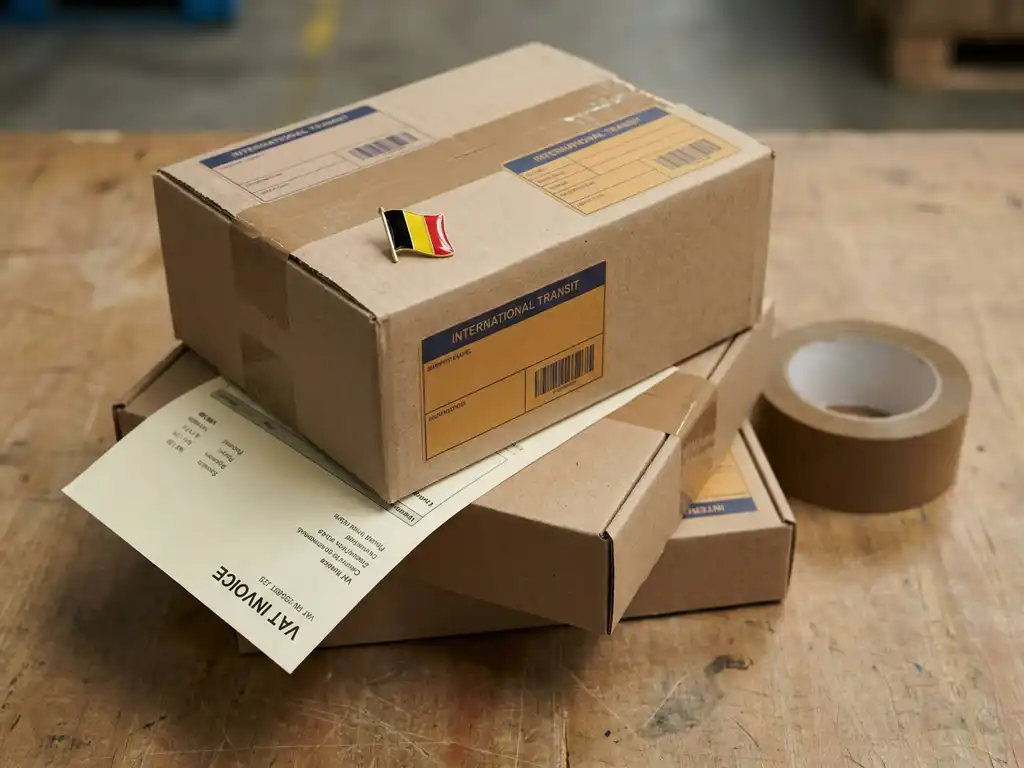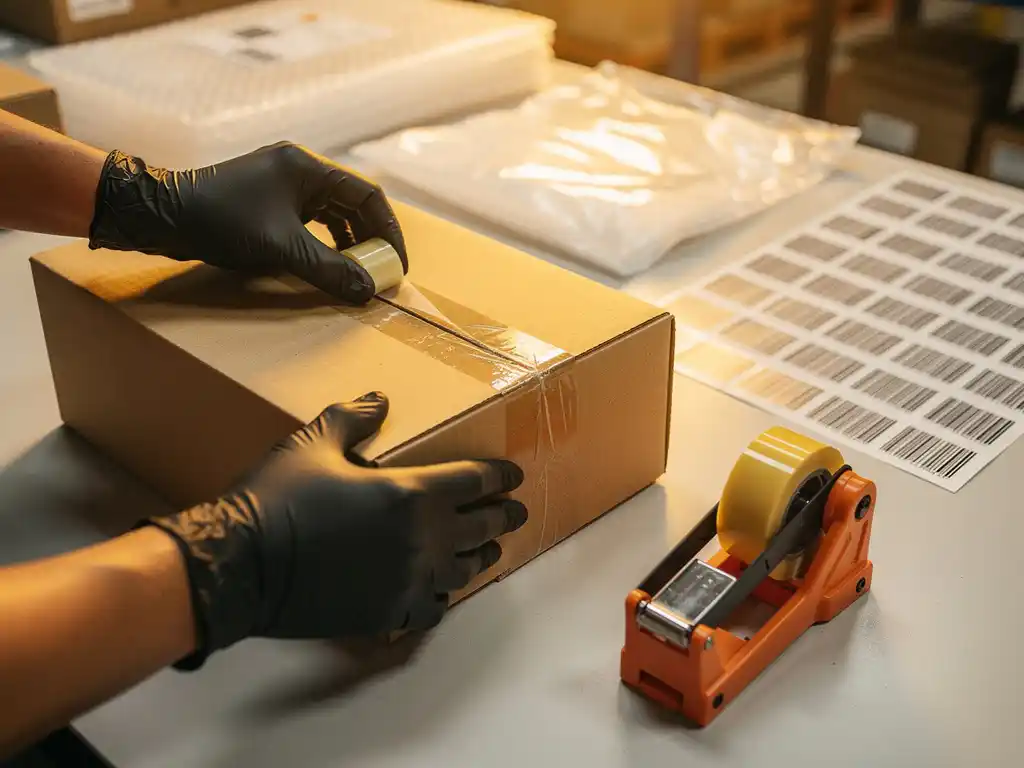

Selling on Amazon through Fulfilled by Amazon (FBA) gives you access to Prime customers, fast delivery, and Amazon’s logistics network. But before your products can benefit from any of that, they need to meet Amazon’s strict packaging and preparation standards. Getting these requirements right from the start saves you time, money, and the frustration of rejected shipments. If you want to scale your brand on Amazon without operational headaches, understanding FBA packaging rules is a non-negotiable first step.
What are Amazon FBA packaging requirements?
Amazon FBA packaging requirements are a set of rules that dictate how products must be packaged, prepared, and labeled before being sent to an Amazon fulfillment center. Products that do not meet these standards may be refused, returned, or disposed of at the seller’s expense. Amazon enforces these rules to ensure efficient processing and safe storage in its warehouses.
At a high level, Amazon requires that every unit arriving at a fulfillment center is:
- Securely packaged to withstand normal handling and shipping
- Properly labeled with a scannable barcode
- Prepared according to the specific category it belongs to
- Free of any additional retail packaging that could confuse fulfillment staff
These rules apply whether you are shipping a single unit or a full pallet. Understanding them in detail before you build your first shipment is essential to avoiding costly mistakes.
What packaging materials are accepted by Amazon FBA?
Amazon FBA accepts a range of standard packaging materials, provided they adequately protect the product and meet minimum durability standards. Accepted materials include corrugated cardboard boxes, poly bags, bubble wrap, and padded envelopes. The key requirement is that packaging must be strong enough to survive a six-sided drop test from a height of roughly 1.2 meters.
Here are the most important material-specific rules to keep in mind:
- Boxes: Must be six-sided, made of corrugated cardboard, and have no sharp edges or protruding staples that could damage other inventory
- Poly bags: Must be transparent, at least 1.5 mil thick, and include a suffocation warning if the opening is larger than 12.7 cm
- Bubble wrap and foam: Acceptable as secondary protection inside a box, but the outer packaging must still meet drop-test standards
- Tape: Must be strong enough to keep the box sealed under pressure; Amazon does not accept string, twine, or rubber bands as closures
Amazon also prohibits loose packing materials like styrofoam peanuts or shredded paper, as these create problems during automated sorting. If you use void fill, it must be in sheet or roll form.
What are the labeling and barcode requirements for Amazon FBA?
Every unit sent to an Amazon FBA fulfillment center must carry a scannable barcode that Amazon can read during receiving. The accepted barcode types are FNSKU (Fulfillment Network Stock Keeping Unit), UPC, EAN, and ISBN. Amazon strongly recommends using FNSKU labels, as these are unique to your seller account and prevent commingling with other sellers’ inventory.
Key labeling rules include:
- Labels must be placed on a flat, scannable surface and must not wrap around edges or curves
- Barcodes must be at least 2.5 cm x 1.5 cm in size and printed clearly without distortion
- Any existing barcodes on the product or outer packaging must be covered if they are not the intended scan code
- Expiry dates, if applicable, must be printed in the format MM-YYYY or MM/YYYY and visible on the outside of the unit
If your products are enrolled in Amazon’s commingling program, your original manufacturer barcode (UPC or EAN) may be sufficient. However, for most sellers, printing and applying FNSKU labels is the safer and more reliable approach.
How do Amazon FBA prep requirements differ by product category?
Amazon FBA prep requirements vary significantly by product category because different types of products carry different risks during storage and fulfillment. What is acceptable for a book is not acceptable for a glass item or a loose powder. Amazon publishes category-specific prep guidelines that sellers must follow in addition to the general packaging rules.
Here is a summary of how requirements differ across common categories:
- Apparel and textiles: Must be in sealed poly bags with a suffocation warning; folded and bagged to maintain shape
- Fragile items (glass, ceramics): Must pass a drop test and be individually wrapped with at least 3 cm of cushioning on all sides
- Liquids: Must be sealed with a secondary closure and able to withstand pressure without leaking; bottles must be upright in the packaging
- Sharp items: Must be fully secured so no edge is exposed; blister packs or rigid clamshells are typically required
- Small items: Must be bagged or boxed so they cannot fall out or become loose during transit
- Hazmat and restricted products: Subject to additional Amazon hazardous materials compliance requirements and may need special documentation
Always check the most current version of Amazon’s category-specific prep requirements in Seller Central before building your shipment plan, as these guidelines are updated regularly.
What mistakes cause Amazon FBA shipments to be rejected?
Amazon FBA shipments are most commonly rejected due to incorrect or missing labels, inadequate packaging that fails to protect the product, and non-compliance with category-specific prep rules. Rejections are costly because Amazon may charge you for remediation or return the shipment entirely, delaying your sales and creating additional logistics costs.
The most frequent mistakes sellers make include:
- Missing or unreadable barcodes: Labels printed on glossy surfaces, placed on curved areas, or damaged during transit will not scan correctly
- Incorrect box weight or dimensions: Boxes exceeding 23 kg (or 15 kg for boxes containing a single heavy item) require a “Team Lift” label; oversized boxes may be refused
- Insufficient cushioning for fragile items: Failing the drop test is one of the most common reasons fragile product shipments are rejected
- No suffocation warning on poly bags: This is a mandatory safety requirement that is frequently overlooked
- Mixed ASINs in a single box without proper documentation: Amazon requires clear separation and labeling when multiple SKUs are packed together
- Expired or incorrectly formatted expiry dates: Products with expiry dates that are too close to the current date or formatted incorrectly will be rejected
A thorough internal quality check before every shipment goes a long way toward avoiding these issues. Many experienced sellers use a pre-shipment checklist aligned to Amazon’s official prep guidelines.
Should you handle FBA packaging in-house or outsource it?
Whether to handle FBA packaging in-house or outsource it depends on your volume, product complexity, and available resources. For businesses shipping small volumes of simple products, in-house prep can be cost-effective. For brands scaling across multiple product lines or markets, outsourcing to a specialist partner typically offers greater speed, accuracy, and cost efficiency at scale.
Consider handling packaging in-house if:
- You have a small, consistent product range with straightforward prep requirements
- Your team already has warehouse capacity and trained staff
- You ship infrequently and volume does not justify an outsourced solution
Consider outsourcing if:
- You are scaling rapidly and cannot absorb the prep workload without disrupting other operations
- You sell across multiple categories with varying prep requirements
- You want to eliminate the risk of non-compliance without building internal expertise
- You are expanding into new European marketplaces where local prep and labeling standards apply
For most growing brands, outsourcing FBA packaging to a partner with dedicated warehouse infrastructure and marketplace expertise is the more scalable choice. It removes operational complexity and reduces the risk of costly rejections.
How Distrilink Helps with Amazon FBA Packaging and Fulfillment
At Distrilink, we help brands grow quickly and in a controlled way on online marketplaces like Amazon. Instead of building your own marketplace team, IT infrastructure, or logistics setup from scratch, you can activate and scale immediately through us. We take on the full operational execution, from packaging compliance and fulfillment to activation, optimization, and customer service, so your brand can expand on Amazon without added complexity.
Here is what working with us looks like in practice:
- We handle all FBA packaging prep from our own in-house warehouse, ensuring every shipment meets Amazon’s current requirements
- We manage labeling, barcoding, and category-specific preparation across all your product lines
- We use our Distrilink Acceleration Platform to manage your products centrally across all connected marketplaces
- We are connected to all major European marketplaces and currently represent more than 25 brands
- We provide clear performance insights so you always have visibility and control over your e-commerce results
With our data-driven and standardized approach, supported by our own platform and fulfillment capabilities, your brand gets speed, control, and clarity without the operational burden. Get in touch with us to find out how we can help you scale on Amazon the right way.
Frequently Asked Questions
How do I find out the exact FBA prep requirements for my specific product before creating a shipment plan?
The most reliable source is Amazon Seller Central, where you can access the FBA Prep Requirements page under the Help section. You can also use the ‘Prep Guidance’ feature directly within the shipment creation workflow, which provides category-specific instructions based on your product’s ASIN. Since Amazon updates these guidelines regularly, always cross-check against the latest version rather than relying on documentation you may have saved previously.
What happens to my inventory if Amazon rejects my FBA shipment at the fulfillment center?
If Amazon rejects your shipment, you typically have three options: pay Amazon to re-prep or relabel the items (which can be costly), have the inventory returned to you or a third-party address, or in some cases Amazon may dispose of the items at your expense. The exact outcome depends on the nature of the non-compliance and Amazon’s current policies at the receiving fulfillment center. This is why catching prep issues before the shipment leaves your facility is far more cost-effective than dealing with rejections after the fact.
Do FBA packaging requirements differ between Amazon's European marketplaces (e.g., Amazon.de vs. Amazon.fr)?
Amazon’s core FBA packaging and prep standards are largely consistent across European marketplaces, but there are important local differences to be aware of. These include language requirements for suffocation warnings on poly bags (which must be in the local language or multiple languages), country-specific labeling regulations, and VAT-related documentation requirements. If you are expanding into multiple European markets, working with a partner who has cross-marketplace expertise can help you stay compliant across all regions simultaneously.
Can I use my manufacturer's original retail packaging, or does it always need to be modified for FBA?
In many cases, original retail packaging is acceptable for FBA as long as it meets Amazon’s durability and labeling standards. However, if the retail packaging includes barcodes that differ from your FNSKU, you will need to cover them or apply an FNSKU label on top. Additionally, if the retail packaging is not sturdy enough to pass the drop test or does not meet category-specific prep requirements, it will need to be reinforced or replaced before shipping to a fulfillment center.
How far in advance of the expiry date does Amazon require products to be received at the fulfillment center?
Amazon requires that products with expiry dates have a minimum remaining shelf life of 90 days upon arrival at the fulfillment center for most categories, though some categories such as food and grocery may require longer lead times. Products that do not meet this threshold will be rejected or disposed of. To avoid this, factor in production lead times, shipping transit time, and potential delays when planning your replenishment cycles, and always verify the current shelf life requirements for your specific product category in Seller Central.
What is the best way to create a pre-shipment checklist to avoid FBA compliance issues?
Start by downloading Amazon’s official FBA Packaging and Prep Requirements documentation and mapping each rule to your specific product categories. Build a checklist that covers labeling accuracy, barcode scannability, box weight and dimensions, cushioning adequacy, poly bag suffocation warnings, and expiry date formatting. Run a physical drop test on a sample unit before each new product launch, and assign a dedicated quality control step in your packing workflow so every box is verified before it is sealed and dispatched.
At what point in my growth does it make financial sense to outsource FBA packaging rather than handling it in-house?
A useful rule of thumb is to evaluate outsourcing when your prep workload starts competing with higher-value tasks like product development, marketing, or supplier management — typically when you are shipping more than a few hundred units per week or managing more than three to four product lines simultaneously. Beyond volume, the complexity of your product mix matters too: if you sell across multiple categories with different prep requirements, the risk of compliance errors and the cost of managing them in-house often outweighs the fees of a specialist partner. Running a simple cost-per-unit comparison between in-house prep costs (labour, materials, space, error rates) and outsourced rates is the clearest way to make the decision.