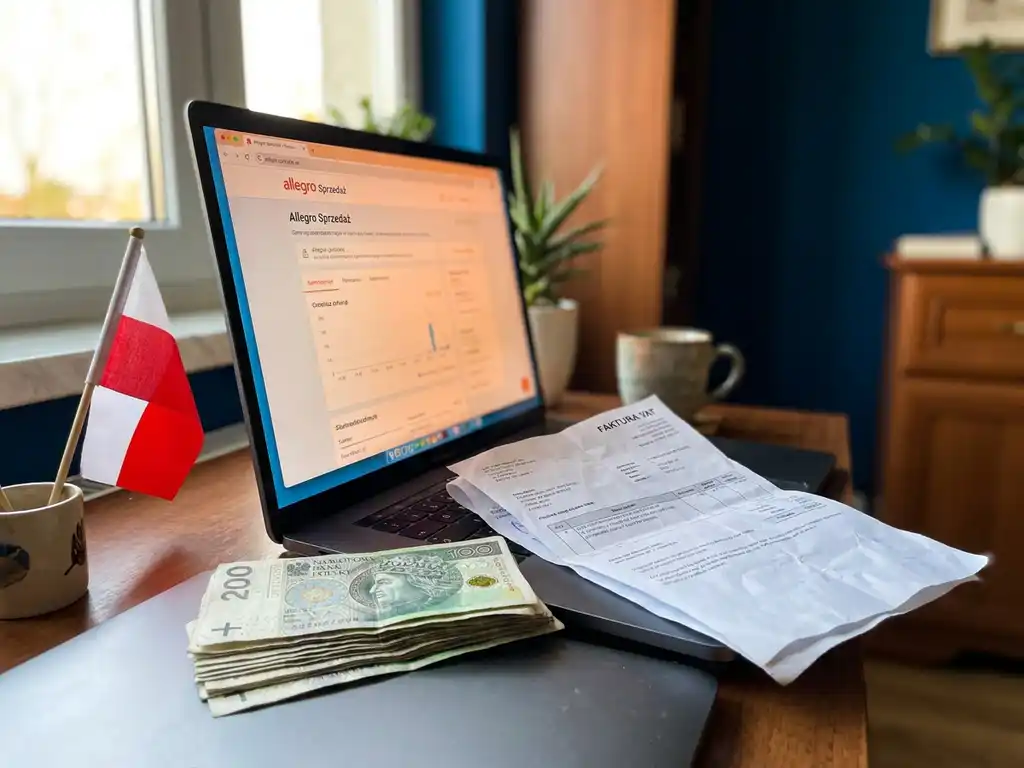

Allegro’s seller rating requirements set a minimum performance threshold that all merchants must maintain to keep their selling privileges on the platform. Sellers are evaluated on a combination of buyer feedback, order fulfilment accuracy, and dispute resolution, with Allegro expecting consistently high scores to ensure a quality shopping experience. The sections below break down exactly how the rating system works, what thresholds matter, and what to do if your score starts to slip.
How does Allegro calculate seller ratings?
Allegro calculates seller ratings based on buyer feedback submitted after completed transactions. Each order gives the buyer the opportunity to leave a positive, neutral, or negative rating, and Allegro aggregates these over a rolling period to produce an overall seller score expressed as a percentage of positive ratings. The higher the share of positive feedback, the stronger the seller’s standing on the Allegro marketplace.
Beyond raw feedback scores, Allegro also monitors several operational indicators that feed into overall seller performance assessments:
- Order cancellation rate: How often a seller cancels orders after they have been placed, which signals stock or fulfilment issues.
- Dispute and return handling: The speed and outcome of buyer complaints, returns, and refund requests.
- Shipping time compliance: Whether orders are dispatched within the declared handling time.
- Response time to buyer messages: Timely communication is tracked and influences overall performance standing.
Allegro uses these signals together to build a picture of seller reliability. A merchant with a high positive feedback percentage but a poor cancellation rate can still face performance warnings, so every metric counts.
What rating thresholds do sellers need to maintain on Allegro?
Allegro requires sellers to maintain a positive feedback rate of at least 98% to remain in good standing. Sellers who fall below this threshold move into a warning zone, and those who drop significantly further risk having their accounts restricted or suspended. Allegro’s rating requirements are among the stricter benchmarks on European marketplaces, reflecting the platform’s focus on buyer trust.
In addition to the overall feedback percentage, Allegro evaluates sellers against specific operational benchmarks. While exact numerical thresholds can be updated by Allegro from time to time, the general expectations for 2026 include:
- A cancellation rate kept as close to 0% as possible, with anything above 2% attracting scrutiny.
- Disputes resolved in the buyer’s favour at a low rate, demonstrating effective pre-sale and post-sale communication.
- Declared shipping times met consistently, with late dispatch rates minimised.
Sellers who consistently exceed these thresholds may qualify for Allegro’s Super Seller programme, which brings additional visibility and buyer trust signals. Maintaining strong Allegro seller performance is therefore not just about avoiding penalties but also about unlocking growth opportunities.
What happens if your Allegro seller rating drops too low?
If your Allegro seller rating drops below the required threshold, the platform will first issue a performance warning notifying you that your account is at risk. Continued underperformance can lead to temporary selling restrictions, reduced visibility in search results, and ultimately full account suspension if the issues are not resolved within the timeframe Allegro specifies.
The practical consequences of a low Allegro seller rating extend beyond account status. Listings from sellers with poor ratings appear lower in search rankings, meaning fewer buyers see your products even if your account remains active. This creates a compounding problem: lower visibility leads to fewer sales, which reduces the volume of new positive reviews needed to bring the score back up.
Allegro also has the authority to withhold payouts or place funds on hold while a seller’s performance is under review, particularly when there are unresolved disputes or a high volume of buyer complaints. Acting quickly when a warning is issued is essential to avoid these financial and operational disruptions.
How can sellers improve a low Allegro rating?
Improving a low Allegro seller rating requires addressing the root causes of negative feedback rather than waiting for scores to recover on their own. The most effective approach combines faster communication, tighter fulfilment processes, and proactive handling of buyer issues before they escalate into formal complaints or negative reviews.
Practical steps to recover and strengthen your Allegro seller performance include:
- Audit your product listings: Inaccurate descriptions, misleading images, or incorrect stock levels are common triggers for buyer dissatisfaction and negative ratings.
- Tighten your fulfilment process: Ensure declared handling times are realistic and that orders are dispatched on time every time.
- Respond to messages quickly: Aim to reply to all buyer enquiries within 24 hours, ideally faster. Slow responses increase the likelihood of disputes.
- Resolve disputes before they escalate: Offer refunds or replacements proactively when an order goes wrong, rather than waiting for Allegro to intervene.
- Monitor your seller dashboard regularly: Allegro’s seller panel shows performance metrics in real time, making it easier to spot emerging issues before they affect your score.
Consistency matters more than any single action. A seller who maintains clean operational processes over several weeks will see their rating recover as new positive transactions outweigh older negative ones in the rolling calculation.
Does Allegro’s rating system differ from Amazon or bol?
Yes, Allegro’s rating system has meaningful differences compared to Amazon and bol, even though all three platforms share the same goal of measuring seller reliability. The key distinctions lie in how feedback is weighted, what operational metrics are tracked, and how quickly performance issues translate into account consequences.
Allegro versus Amazon
Amazon uses a more complex seller performance framework that includes an Order Defect Rate, Late Shipment Rate, and Pre-Fulfilment Cancellation Rate, each with specific numerical thresholds that trigger account review. Amazon’s system is largely automated, meaning accounts can be suspended without prior warning if a metric breaches a threshold. Allegro’s approach is somewhat more graduated, with warning periods before restrictions are applied, though this can vary depending on the severity of the performance drop.
Allegro versus bol
bol, which operates primarily in the Netherlands and Belgium, uses a seller score system that weights recent performance more heavily than older transactions, and it publishes a visible seller score on product pages that buyers can see before purchasing. Allegro’s feedback percentage is also visible to buyers, but the weighting mechanics and the specific metrics that feed into the score differ. bol places particularly strong emphasis on on-time delivery performance, while Allegro’s system gives significant weight to buyer-submitted ratings and dispute outcomes.
For brands selling across multiple European marketplaces simultaneously, understanding these differences is important. A strategy that keeps your Amazon account in good standing will not automatically translate to strong Allegro seller performance, because the thresholds, measurement windows, and consequences are platform-specific.
How Distrilink helps you scale on Allegro and beyond
Managing Allegro seller requirements alongside the demands of other marketplaces is operationally complex, especially when you are trying to grow at the same time. At Distrilink, we help brands activate and scale on Allegro and all major European marketplaces quickly and in a controlled way, without having to build a full in-house marketplace team, IT infrastructure, or logistics operation from scratch.
Here is what we take off your plate:
- Full account activation and optimisation: From setting up your Allegro seller account to optimising listings for visibility and conversion.
- Performance monitoring: We track your Allegro rating system metrics in real time and act before issues affect your standing.
- Logistics and fulfilment: Our in-house warehouse gives you the flexibility to meet declared shipping times consistently, one of the biggest drivers of seller performance.
- Customer service: We handle buyer messages, disputes, and returns so your response times stay strong and complaints are resolved before they become negative ratings.
- Centralised management: All your products and performance data across every marketplace are managed through our own platform, giving you clear insight without the complexity.
We represent more than 25 brands and are connected to all major European marketplaces. Brands grow their e-commerce presence through us without adding operational complexity, with speed, control, and full visibility into their performance at every step. Ready to scale on Allegro without the operational burden? Get in touch with us and we will show you how.
Frequently Asked Questions
How long does it take for an Allegro seller rating to recover after it drops below the threshold?
Recovery timelines depend on your sales volume and the rolling period Allegro uses to calculate your score. Higher-volume sellers recover faster because each new positive transaction carries more weight in the overall calculation. In practice, sellers who address the root causes of negative feedback immediately and maintain clean operations can expect to see meaningful score improvement within four to eight weeks, though this varies depending on how far the rating dropped and how consistently new positive reviews accumulate.
Can a single large volume of negative reviews permanently damage my Allegro account?
A sudden spike in negative feedback is serious but not necessarily permanent, provided you act quickly. Allegro’s rolling calculation means older ratings gradually lose influence as new transactions come in. The critical step is to stop the source of the problem immediately, whether that is a fulfilment issue, a misleading listing, or a supplier quality problem, and then proactively resolve any open disputes. If Allegro issues a performance warning during this period, responding formally through the seller panel and demonstrating corrective action can help prevent escalation to a full restriction.
What is the Allegro Super Seller programme and how do I qualify for it?
The Allegro Super Seller programme is a recognition tier for top-performing merchants that rewards consistent excellence across all key performance metrics, including feedback score, cancellation rate, shipping compliance, and dispute resolution. Qualifying sellers receive a visible Super Seller badge on their listings, which increases buyer trust and typically improves conversion rates. To qualify, you need to sustain performance well above the standard minimum thresholds over an extended period, meaning a positive feedback rate significantly above 98% and operational metrics kept as close to zero defects as possible. Allegro reviews eligibility periodically, so maintaining strong performance consistently is the only reliable path to earning and keeping the status.
Is it possible to dispute or remove unfair negative feedback on Allegro?
Yes, Allegro does provide a process for sellers to flag feedback that violates platform policies, such as reviews that are abusive, irrelevant to the transaction, or left in error. However, Allegro does not remove negative feedback simply because the seller disagrees with it or because the issue was subsequently resolved. The strongest approach is to contact the buyer directly and professionally to resolve their concern, as satisfied buyers can voluntarily update or remove their original rating. Preventing negative feedback through proactive communication remains far more effective than attempting to remove it after the fact.
How should I handle a situation where my Allegro account has been restricted due to low performance?
If your Allegro account has been restricted, the first step is to log into your seller panel and review the specific metrics and reasons cited in the restriction notice. Allegro typically provides a formal appeals or response process where you can submit a corrective action plan outlining the steps you are taking to address each flagged issue. Your plan should be specific, factual, and focused on operational changes rather than explanations of why the problems occurred. Engaging a marketplace management partner like Distrilink at this stage can be particularly valuable, as experienced specialists can help you draft an effective response and implement the operational fixes needed to restore your account standing quickly.
Does Allegro's rating system treat new sellers differently from established ones?
Allegro does not publicly apply a formal leniency programme for new sellers in the way some other marketplaces do, but in practice, accounts with very few transactions are more vulnerable to score swings because each individual rating carries a larger proportional weight. A new seller with ten completed orders who receives one negative review will see a much sharper score drop than an established seller with thousands of transactions. This makes the early stage of selling on Allegro particularly important: prioritising fulfilment accuracy, accurate listings, and fast communication from your very first orders builds a stable foundation that protects your score as volume grows.
What are the most common mistakes sellers make that lead to a declining Allegro rating?
The most frequent mistakes are overpromising on shipping times, listing products with inaccurate descriptions or stock levels, and being slow to respond to buyer messages or complaints. Sellers often set optimistic handling times to appear competitive, then fail to meet them consistently, which directly triggers negative feedback and late dispatch flags. Another common error is waiting for buyers to escalate issues to formal disputes rather than reaching out proactively when an order goes wrong. Addressing these three areas, realistic shipping commitments, accurate listings, and fast proactive communication, eliminates the majority of the causes behind a declining Allegro seller rating.